Common Problems Faced by Chinese Nationals in Thailand in 2025

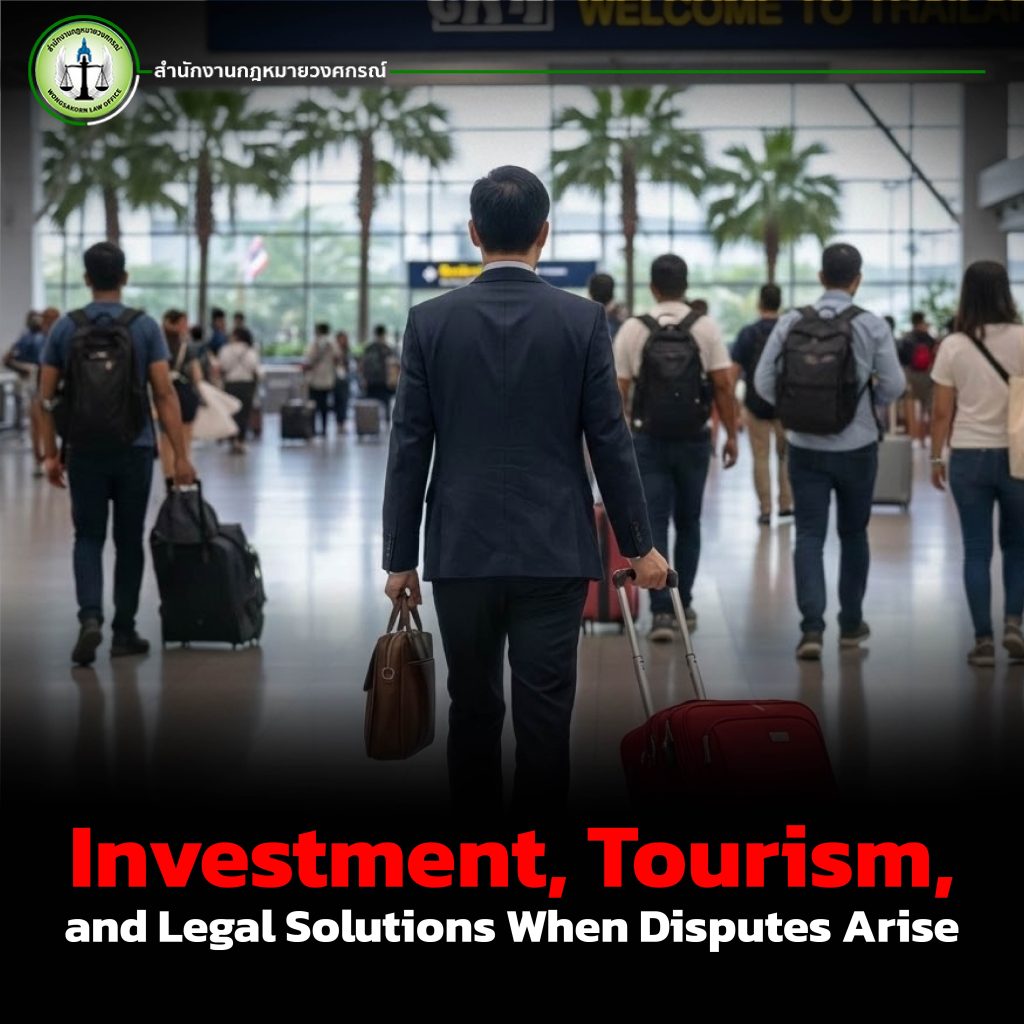
Investment, Tourism, and Legal Solutions When Disputes Arise

In 2025, Thailand will continue to be one of the most popular destinations for Chinese nationals, whether for tourism, business investment, or long-term residence. With its attractive tourist destinations, rich cultural diversity, affordable cost of living, and promising economic opportunities, Thailand remains highly appealing. However, in practice, many Chinese nationals encounter various challenges arising from differences in language, legal systems, cultural norms, and administrative procedures in Thailand.

This article outlines the common problems faced by Chinese nationals when traveling to or investing in Thailand in 2025, covering tourism-related issues, business and investment challenges, and legal risks. It also provides guidance on prevention and proper solutions, concluding with recommendations for consulting lawyers who specialize in legal cases involving Chinese nationals in Thailand through Wongsakorn Law Office.

One of the most common challenges faced by Chinese nationals in Thailand is language barriers. While English or Chinese may be used in major cities, Thai remains the primary language in rural areas, government offices, and official administrative procedures.

Unclear communication may result in:

  • Misinterpretation of legal provisions
  • Signing contracts or legal obligations without fully understanding the content
  • Inability to communicate effectively with authorities such as police officers, hospitals, or banks
  • Being placed at a disadvantage during negotiations or disputes

Due to significant differences between Thai law and the Chinese legal system, as well as differences in enforcement practices, Chinese nationals often face legal challenges in the following areas:

Traffic Regulations and Driving Licenses
Many are unaware that an international driving permit or a Thai driving license is required. Failure to present proper documentation may result in fines or vehicle seizure.

Copyright and Intellectual Property Infringement
Selling counterfeit branded goods or importing infringing products may lead to both criminal and civil liability.

Labor Law Issues
Chinese investors who employ workers may encounter disputes due to a lack of understanding of Thai labor laws, including working hours, employee benefits, and employment contracts.

Thailand attracts many foreign investors, but Chinese investors often face business-related obstacles, including:

Company Registration
There are legal restrictions on foreign shareholding ratios and foreign business regulations that may be misunderstood or improperly applied.

Business Contracts
Signing contracts drafted in Thai without proper legal understanding may lead to unfair terms or unfavorable legal obligations.

Taxation and Financial Compliance
Lack of understanding of VAT, corporate income tax, or Bank of Thailand regulations may result in violations, penalties, or legal accusations.

Differences in culture and working styles may also create difficulties, such as:

  • Different corporate management systems
  • Misunderstandings during negotiations
  • Differing expectations regarding service quality, standards, or timelines

Although these issues may not be purely legal, they can significantly affect business operations and long-term success.

When facing criminal accusations or legal disputes whether criminal, civil, or labor-related many Chinese nationals find themselves in difficult situations due to:

Lack of Understanding of the Thai Legal System
Thailand’s judicial process differs from China’s, and misunderstanding procedural requirements may result in legal disadvantages.

Language Barriers
Without interpreters or lawyers fluent in Chinese and Thai law, critical information may be misunderstood or overlooked.

Arrest and Detention Risks
If an arrest warrant exists or a criminal complaint has been filed, arrest in Thailand may significantly impact bail proceedings and long-term legal outcomes.

Legal Solutions: Consulting Lawyers Specialized in Chinese-Related Cases

When legal issues escalate into disputes or litigation in Thailand, Chinese nationals need not worry. Specialized legal services are available to support Chinese investors and tourists, including:

Pre-Entry Legal Consultation
Advisory services before traveling to or investing in Thailand to minimize legal risks.

Legal Status Verification
Such as checking whether an arrest warrant exists, without the need to travel to Thailand.

Legal Representation in Thailand
Including statements to authorities, filing petitions, initiating lawsuits, and court representation through legal counsel.

Document Translation and Legal Representation
Lawyers experienced in handling cases involving Chinese nationals can provide accurate translations and clear legal explanations.

Thailand remains an attractive destination for Chinese nationals in 2025. However, living, investing, or traveling in Thailand inevitably involves legal risks and challenges that differ from those in China. Verifying legal status, understanding local laws, and engaging experienced legal counsel can help Chinese nationals navigate these challenges with confidence.

If you are a Chinese national facing legal, business, or investment-related issues in Thailand, you may consult lawyers specializing in Chinese-related legal cases at Wongsakorn Law Office, ensuring that your stay, business operations, and activities in Thailand proceed smoothly and lawfully.

Drafting a Legal Notice: Why Should It Be Prepared by a Lawyer?

Reducing Legal Risks and Strengthening Your Negotiating Power in Every Dispute

In the business world and internal corporate operations, a “Notice” or “Legal Notice / Letter of Notice” is a legal document of significant importance. Whether the issue involves internal organizational disputes, employer–employee conflicts, or commercial disputes between companies and business partners, a legal notice often serves as the starting point of a legal process that may lead to negotiations, dispute resolution, or litigation before the courts.

However, many organizations and individuals often ask: “Can a legal notice be drafted independently?” and “Why should a lawyer be engaged to draft a notice?” This article by Wongsakorn Law Office explains the importance of legal notices, compares the advantages and disadvantages of self-drafting versus lawyer-drafted notices, and helps you make informed decisions while minimizing long-term legal risks.

What Is a Legal Notice and Why Is It Important?

A legal notice is a formal written document intended to notify the other party of facts, claims, or demands for corrective action within a specified timeframe. Legal notices are commonly used in situations such as:

  • Demand for payment of outstanding debts
  • Notification of breach of contract
  • Demand to cease infringing acts
  • Disciplinary warnings or internal misconduct notifications
  • Notice of contract termination or reservation of legal rights

A legal notice is not merely an ordinary letter. It may later be used as evidence in court and can directly affect the rights, duties, and liabilities of the parties involved.

Self-Drafting a Legal Notice: Advantages and Limitations

Advantages of Self-Drafting

1.Short-term cost savings
No immediate legal fees are required.

2.Speed and convenience
The notice can be written and sent without undergoing legal consultation.

Disadvantages and Legal Risks

1.Improper legal language
Inappropriate wording may render the notice legally ineffective or give the opposing party grounds to challenge it.

2.Incorrect facts or legal references
Misstating laws or contractual terms may place the sender at a disadvantage from the outset.

3.Unintentional infringement of the other party’s rights
Overly aggressive or threatening language may expose the sender to legal liability.

4.Negative impact on future legal proceedings
Poorly drafted notices may later be used as unfavorable evidence in court.

Benefits of Having a Lawyer Draft a Legal Notice

1. Accurate, comprehensive, and legally effective language
Lawyers possess the expertise to select precise legal wording that aligns with applicable laws and factual circumstances, ensuring the notice carries legal weight and credibility.

2. Strategic planning before litigation arises
A lawyer-drafted notice is not merely a notification, but a strategic legal step designed to protect the client’s rights should the matter escalate to court.

3. Enhanced negotiating power and legal pressure
Notices issued by lawyers or law firms often signal seriousness, encouraging negotiations or dispute resolution without litigation.

4. Reduced risk of counterclaims or further disputes
Lawyers carefully review content to avoid wording that may create additional liabilities or future legal conflicts.

Legal Notices: A Systematic Tool for Managing Business and Organizational Disputes

In dispute management whether internal organizational issues or conflicts between businesses and partners structured actions supported by clear legal documentation are essential. Legal notices serve as a formal mechanism to communicate claims, notify breaches, or assert legal rights.

Proper use of legal notices not only informs the opposing party and offers an opportunity for early resolution, but also establishes a clear legal framework for negotiations, alternative dispute resolution, or litigation, ensuring fairness and efficiency for all parties.

Such disputes may include:

  • Employer–employee conflicts
  • Conflicts of interest
  • Breach of business contracts
  • Outstanding payments between business partners

Beginning with a properly drafted legal notice prepared by a lawyer enables organizations to manage disputes systematically, preserve evidence, and reduce both legal and reputational risks.

A Well-Drafted Legal Notice: The Professional First Step Toward Resolution

Although self-drafting a notice may appear simple and cost-effective, it often carries substantial legal risks. Engaging a lawyer to draft a legal notice is a worthwhile investment that protects rights, minimizes errors, and increases the likelihood of efficient dispute resolution.

Legal Notice and Document Drafting Services by Wongsakorn Law Office

Wongsakorn Law Office provides professional services including:

  • Drafting legal notices and formal letters
  • Drafting contracts and business agreements
  • Drafting all types of legal documents
  • Legal consultation on disputes and litigation

If you are facing a dispute or are unsure how to proceed, consulting a lawyer from the outset allows you to take the right steps safely and effectively. Contact Wongsakorn Law Office today for professional legal advice.

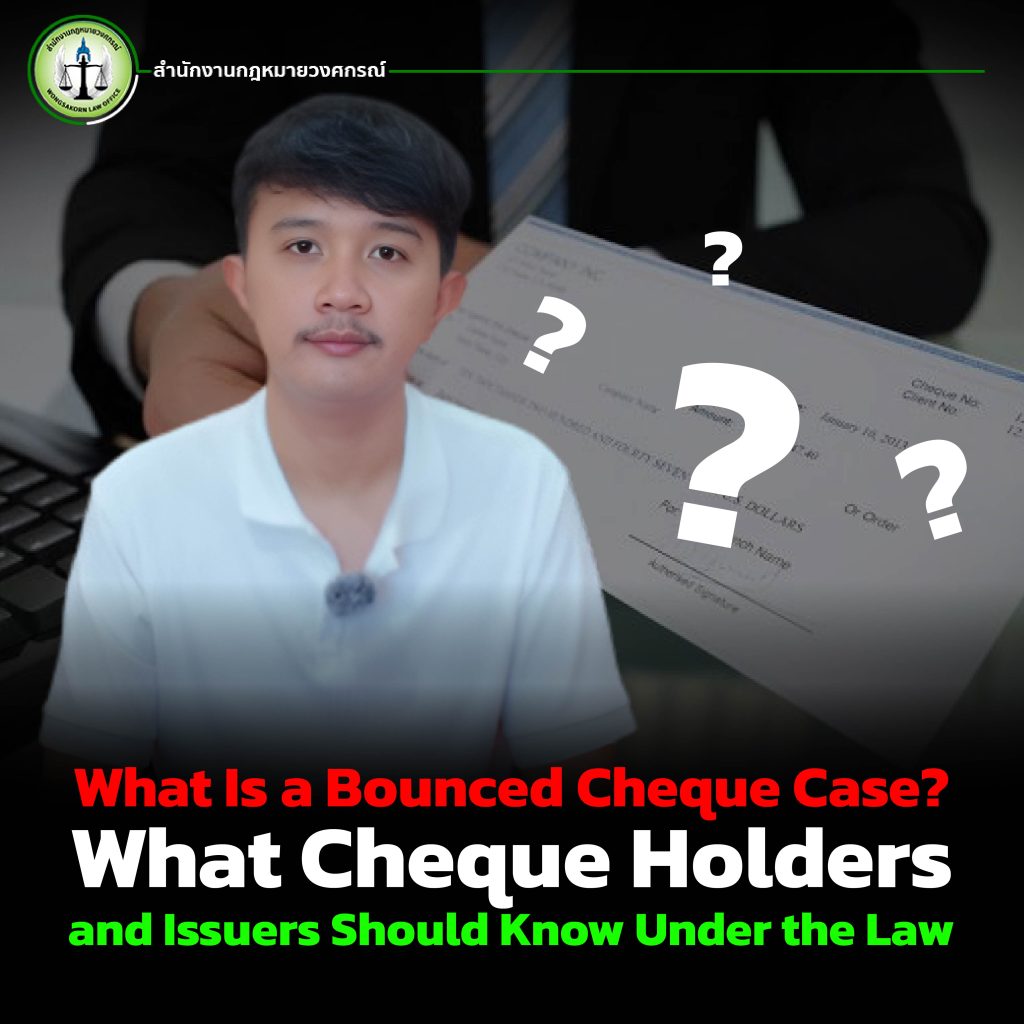
What Is a Bounced Cheque Case? What Cheque Holders and Issuers Should Know Under the Law

In business practice and financial transactions, a cheque remains an important instrument for settling debts between contracting parties, whether for the sale of goods, service agreements, or commercial payments. However, one common issue that frequently gives rise to legal disputes is a bounced cheque, which may lead to both criminal and civil liability if the parties involved do not properly understand their rights and obligations under the law.

What Is a Bounced Cheque?

A bounced cheque refers to a situation where the cheque holder presents the cheque for payment at a bank, but the bank refuses to honor the payment for the amount stated on the cheque. Common reasons for a cheque being dishonored include:

  • Insufficient funds in the account
  • The bank account has been closed
  • The account has been suspended by the bank
  • The signature on the cheque does not match the bank’s records

When a cheque is dishonored, the cheque issuer may be subject to legal liability, particularly where the case falls within the scope of a criminal bounced cheque offense.

Is Issuing a Bounced Cheque a Criminal Offense?

Under the law, if a cheque is issued for the purpose of settling a debt, and such debt is legally enforceable, the issuer of a bounced cheque may be subject to criminal penalties, including:

  • A fine of not more than 60,000 THB, or
  • Imprisonment for a term not exceeding one year,
  • Or both a fine and imprisonment.

However, not all bounced cheque cases can be prosecuted criminally. The injured party must strictly comply with the procedures and time limits prescribed by law.

What Should the Cheque Holder Do When a Cheque Bounces?

When a cheque is dishonored, many cheque holders feel uncertain about how to proceed or fear losing their legal rights due to procedural errors. In fact, the law clearly prescribes the proper steps and time limits for legal action. If the cheque holder acts promptly and correctly from the outset, the chances of enforcing their rights and minimizing losses will be significantly increased.

1. File a Criminal Complaint Within the Prescribed Period

The injured party must file a criminal complaint with the investigating officer within three months from the date the cheque is dishonored. If this period expires, the criminal case becomes time-barred, and criminal proceedings against the cheque issuer can no longer be initiated.

After a complaint has been filed, there are two primary legal approaches:

Approach 1: Prosecution Through the Investigating Officer
The investigating officer will conduct an investigation, collect evidence, and submit the case file to the public prosecutor for consideration and prosecution before the court. This is the standard criminal procedure, though it may take a considerable amount of time.

Approach 2: Direct Filing of the Case Through a Lawyer
The injured party may engage a lawyer to file the case directly with the court. In practice, this method is often faster and allows for more effective legal strategy planning.

Key Issue: The Cheque Must Be Issued to Settle a “Legally Enforceable Debt”

The core element of a bounced cheque case is that the cheque must be issued to settle an existing debt that is legally enforceable.

Example of a Legally Enforceable Debt
Mr. A purchases steel from Mr. B and issues a cheque to pay for the goods. This constitutes a lawful debt arising from a sales contract. If the cheque bounces, Mr. B may initiate a bounced cheque case.

Example of a Non-Enforceable Debt
Mr. A issues a cheque to Mr. B to settle an illegal gambling debt. If Mr. B presents the cheque and it bounces, Mr. B cannot file a bounced cheque case, as gambling debts are not recognized or enforceable under the law.

Can a Civil Lawsuit Also Be Filed?

In addition to criminal proceedings, the injured party may also file a civil lawsuit to claim damages equal to the amount stated on the cheque, as the cheque issuer remains liable under the terms of the cheque.

However, investigating officers do not handle civil cases. The injured party must engage a lawyer to pursue civil proceedings independently. Properly coordinating civil and criminal actions can significantly increase the chances of recovery and reduce financial losses.

Why Is Consulting a Lawyer Important?

Bounced cheque cases involve complex legal issues, including statutes of limitation, debt validity, and litigation strategy. Procedural mistakes may result in the loss of legal rights without the injured party even realizing it.

If you are a victim of a bounced cheque case or have questions regarding civil or criminal proceedings, consulting a lawyer at an early stage will help you understand your rights, plan your case correctly, and reduce legal risks. You may contact a lawyer directly by clicking >>Contact Us<<.

An Employee Working for a Competing Company: What Can an Employer Do, and What Are the Legal Rights?

Human resource issues remain one of the most significant risks faced by companies and organizations, particularly in today’s highly competitive business environment. One situation that often causes serious concern for employers is discovering that an employee has taken on work or provided services to a competing company. This may include performing similar work, providing consultancy services, selling confidential information, or engaging in outside employment that could adversely affect the interests of the original employer.

The key question is: what actions can an employer legally take in such circumstances, and how should the situation be handled properly to avoid placing the company at a disadvantage or triggering legal disputes in the future?

This question cannot be answered simply with a “yes” or “no.” It must be assessed on a case-by-case basis, taking into account several factors, including:

1.The Nature of the Work Performed

oIs the work similar to the employer’s business?

oDoes it involve direct competition or the solicitation of the employer’s clients?

2.The Employee’s Position and Responsibilities

oIs the employee in a management or executive role, or a position with access to sensitive information?

oDoes the role involve company strategies, pricing, clients, or confidential data?

3.Employment Contract Terms

oIs there a non-moonlighting clause?

oIs there a non-competition clause?

oIs there a confidentiality or non-disclosure agreement (NDA)?

If the employee engages in work for a competitor in violation of contractual obligations or breaches the duty of loyalty and good faith owed to the employer, such conduct may constitute a breach of contract or a violation of labor discipline.

Potential Risks to the Employer

An employee working for a competing company may expose the employer to several risks, including:

  • Leakage of internal or confidential information, such as client lists, pricing, or business strategies
  • Loss of clients or business opportunities
  • Conflicts of interest
  • Damage to the company’s reputation and credibility
  • Negative impact on employee morale within the organization

Such behavior should not be overlooked, as it may result in long-term and irreparable damage to the business.

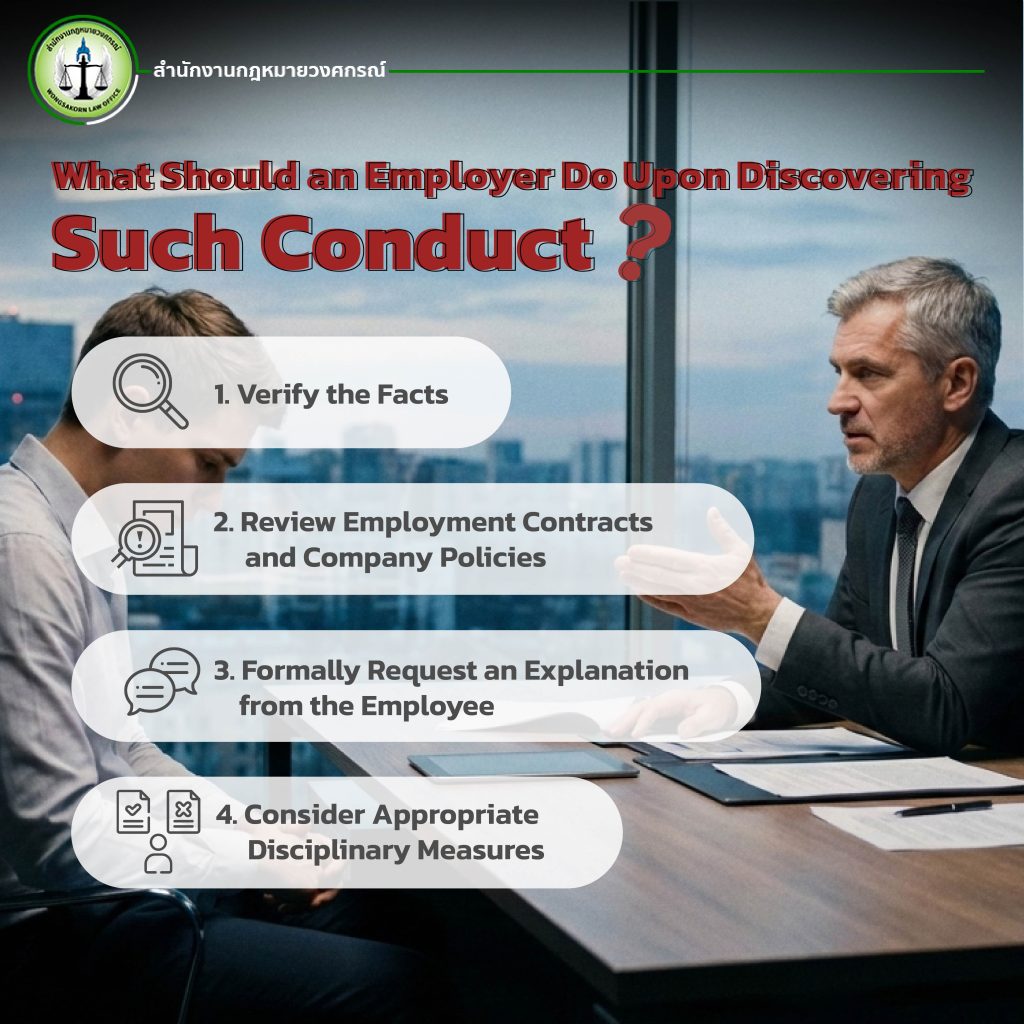
When an employer becomes aware of, or suspects, that an employee is working for a competitor, the matter should be handled carefully and systematically:

1.  Verify the Facts

oCollect evidence such as documents, communications, or witness statements

oAvoid making decisions based solely on rumors or assumptions

2.  Review Employment Contracts and Company Policies

oExamine contractual restrictions and relevant company regulations

oReview policies on outside employment and conflicts of interest

3.  Formally Request an Explanation from the Employee

oProvide the employee with an opportunity to explain

oDocument the discussion in writing for evidentiary purposes

4.  Consider Appropriate Disciplinary Measures

oIssue a written warning

oImpose disciplinary action in accordance with company rules

oIn serious cases, consider lawful termination under labor law

All actions must be conducted fairly, transparently, and in compliance with labor laws to avoid potential counterclaims against the company.

Can the Employer File a Lawsuit?

In certain cases, if it can be proven that the employee:

  • Breached the employment contract
  • Misused or disclosed confidential information
  • Engaged in unfair competition

The employer may be entitled to claim damages or seek court-issued injunctive relief to prevent further misconduct. However, litigation requires careful legal planning and strong supporting evidence.

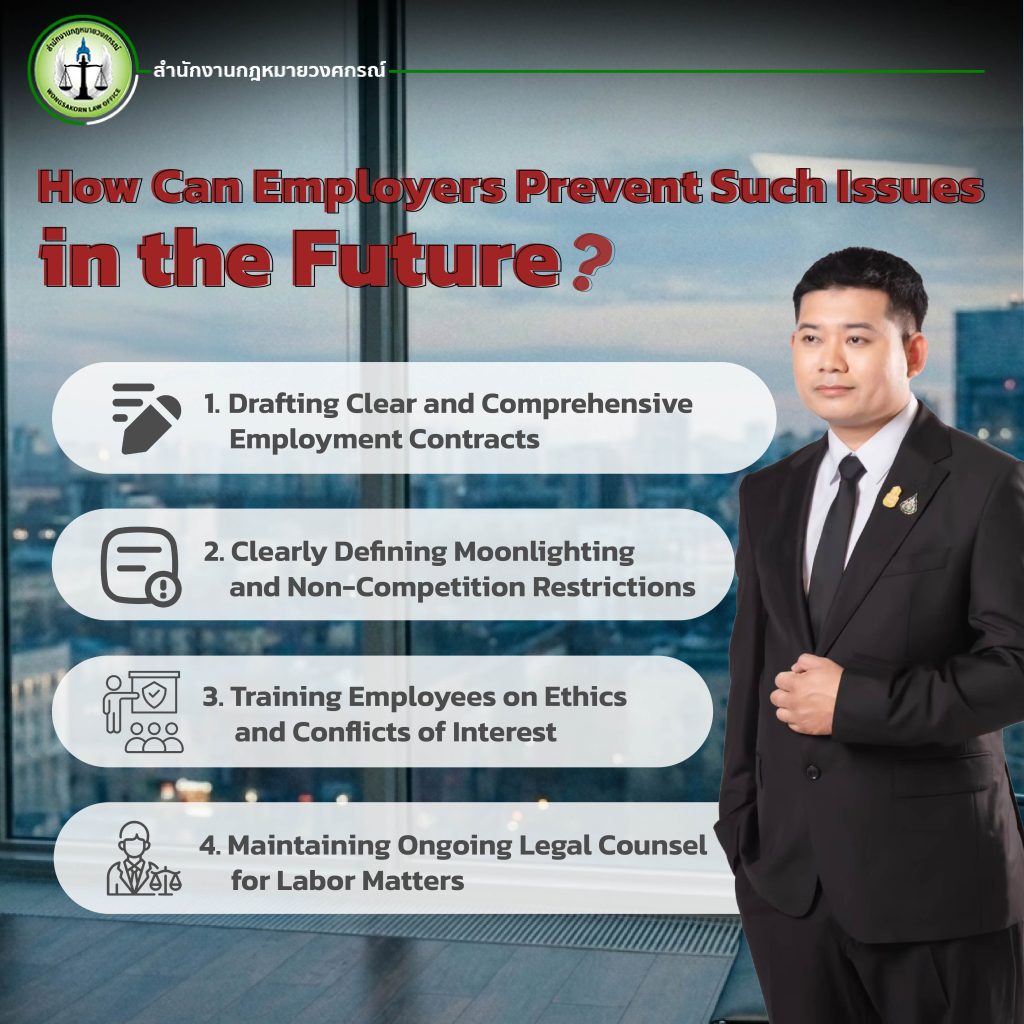
Preventive measures should be part of an organization’s management system from the outset, not only after a problem arises. Key preventive strategies include:

1.Drafting Clear and Comprehensive Employment Contracts
Employment contracts should clearly define duties, responsibilities, scope of work, and necessary restrictions especially for roles involving sensitive information or competitive activities.

2.Clearly Defining Moonlighting and Non-Competition Restrictions
Policies and contractual clauses should specify permissible and prohibited outside work, including scope, duration, and what constitutes a breach, ensuring enforceability under the law.

3.Training Employees on Ethics and Conflicts of Interest
Regular training and communication on ethical conduct, confidentiality, and legal consequences can reduce misunderstandings and foster a culture of transparency and accountability.

4.Maintaining Ongoing Legal Counsel for Labor Matters
Having an experienced labor law advisor allows employers to update contracts and policies, assess risks, and address potential issues proactively rather than reactively.

In summary, preventing employees from working for competitors requires more than disciplinary control. It requires a solid legal framework, clear communication, and continuous legal oversight to ensure sustainable and secure business operations.

Consulting a Lawyer The Safest Solution for Employers

Cases involving employees working for competitors are legally sensitive and complex. Mishandling such matters may place the employer at risk of legal disadvantage or counterclaims.

Consulting a lawyer from the outset enables employers to fully understand their rights, obligations, and appropriate courses of action. In labor-related matters, making the right decision at the beginning is the key to effectively protecting the organization’s long-term interests.

What Is a Warrant Check, and Why Should Foreign Nationals Verify Warrants Before Entering or Residing in Thailand?

In Thailand’s criminal justice system, an arrest warrant is a legal instrument that directly affects an individual’s personal liberty. If an arrest warrant has been issued, the person concerned may be arrested immediately without prior notice, regardless of location or personal circumstances. For this reason, conducting a warrant check is of critical importance particularly for foreign nationals who enter Thailand to reside, work, travel, or conduct business.

This article explains what a warrant check is, the legal implications of arrest warrants under Thai law, and why foreign nationals should never overlook the importance of verifying their warrant status before or during their stay in Thailand.

What Is an Arrest Warrant?

An arrest warrant is a court order issued upon the request of an inquiry officer or a public prosecutor, authorizing law enforcement officers to arrest a person suspected of having committed a criminal offense. A warrant is generally issued when there are reasonable grounds to believe that the suspect may flee, interfere with evidence, or fail to appear in response to a summons.

Once issued by the court, an arrest warrant is enforceable throughout the Kingdom of Thailand. Law enforcement officers may execute the arrest immediately without prior notice, regardless of whether the individual has entered Thailand or is already residing in the country.


What Types of Cases Are Typically Associated with Arrest Warrants?

In general, arrest warrants in Thailand are related to criminal cases, including but not limited to:

  • General criminal offenses
  • Economic and financial crimes
  • Money laundering cases
  • Fraud offenses
  • Labor-related offenses
  • Immigration-related offenses

In many cases, the person subject to an arrest warrant may be unaware of its existence particularly in matters arising from past incidents, complaints filed without knowledge of the suspect’s whereabouts, or cases that continue while the suspect is residing abroad.

What Is a Warrant Check?

A warrant check is the process of verifying whether a specific individual has an outstanding arrest warrant recorded in the court system or with law enforcement authorities. A warrant check helps determine:

  • Whether an arrest warrant exists
  • Which court issued the warrant
  • The nature of the case
  • The current stage of the legal proceedings

Having this information in advance is essential, as it allows for careful and informed legal planning.

How Can Foreign Nationals Conduct a Warrant Check?

In practice, a warrant check cannot be easily conducted by individuals on their own. It involves access to legal records, interaction with relevant authorities, and proper legal interpretation. Conducting a warrant check through an experienced lawyer ensures that the process is carried out accurately, discreetly, and without creating additional legal risks for the individual concerned.

Why Should Foreign Nationals Check for Arrest Warrants?

For foreign nationals, verifying warrant status is far more important than many realize. The existence of an arrest warrant may have serious consequences, including:

1.  Immediate Risk of Arrest
A foreign national with an outstanding warrant may be arrested at immigration checkpoints, airports, hotels, or workplaces, potentially causing severe reputational and business damage.

2.  Impact on Travel and Visa Status
The discovery of an arrest warrant may affect immigration status, visa renewals, or even result in revocation of the right to remain in Thailand.

3.  Language and Legal System Barriers
Foreign nationals arrested without prior knowledge may face significant disadvantages due to language barriers and unfamiliarity with Thai legal procedures.

4.  Business and Reputational Consequences
For investors and business operators, an unexpected arrest may undermine the confidence of business partners, stakeholders, and affiliated organizations.

Warrant Checks: A Key to Strategic Legal Planning

Before a criminal matter escalates into an unexpected arrest, conducting a warrant check is a crucial step in preparing a structured and secure legal strategy. Knowing one’s legal status from the outset helps reduce the risk of sudden arrest and enables appropriate case management with legal counsel.

A prior warrant check allows individuals to:

  • Prepare for a voluntary and properly coordinated meeting with inquiry officers
  • Plan and submit an application for temporary release (bail) effectively
  • Gather relevant documents and evidence in advance
  • Consult with a lawyer to establish a sound defense strategy

In many cases, voluntarily appearing before authorities with legal representation from the outset can reduce case tension, enhance credibility in the justice process, and significantly increase the likelihood of being granted bail compared to an unexpected arrest.

Warrant Checks as Legal Risk Prevention

Arrest warrants should never be overlooked especially by foreign nationals residing in or traveling to Thailand. Conducting a warrant check in advance serves as an essential form of legal risk prevention, enabling individuals to respond appropriately and minimize potential impacts on personal liberty, daily life, and business operations.

If you are a foreign national or have concerns regarding your legal status in Thailand, consulting a lawyer to conduct a warrant check is the safest and most prudent course of action. Proper legal advice allows you to live and conduct business in Thailand with confidence and in full compliance with Thai law.

What Should Foreign Nationals Do If Arrested in Thailand? Understanding Essential Legal Rights and the Importance of Bail under Thai Law

Thailand welcomes a large number of foreign nationals each year for residence, employment, tourism, and business purposes. However, despite the best precautions, situations may arise in which a foreign national is arrested by Thai authorities, whether in connection with criminal matters, labor disputes, immigration issues, or other legal proceedings under Thai law.

It is important to emphasize that foreign nationals in Thailand are entitled to fundamental legal rights under Thai law, particularly rights within the criminal justice process and the right to apply for bail in order to defend their case fairly. Unfortunately, many foreign nationals are not fully aware of these rights, which may place them at a disadvantage during legal proceedings.

This article provides an overview of the essential rights of foreign nationals when arrested in Thailand and explains how these rights, including the right to bail, can be exercised to ensure proper legal protection.

1. The Right to Be Informed of the Grounds for Arrest

One of the most fundamental rights of an arrested person is the right to be informed of the reason for the arrest.

Thai law requires law enforcement officers to clearly inform the arrested person of:

  • The specific charge(s),
  • The factual grounds for the arrest, and
  • The legal provisions relied upon.

Failure to properly inform the arrested person may render the arrest unlawful and may be challenged during the investigation or court proceedings.

2. The Right to Immediate Access to Legal Counsel

A foreign national who has been arrested has the right to consult with a lawyer immediately, either:

  • A lawyer of their own choosing, or
  • A lawyer arranged with the assistance of the authorities.

The arrested person is also entitled to consult with legal counsel privately before providing any statement to investigators. Early legal representation is particularly important in cases involving language barriers, as it helps prevent misunderstandings and protects the individual’s legal interests from the outset.

3. The Right Against Self-Incrimination

Under Thai law, an arrested person has the right to:

  • Remain silent,
  • Decline to answer certain questions, or
  • Wait until legal counsel is present before giving a written statement.

It is important to note that remaining silent does not constitute an offense. Any statement given may later be used as evidence in legal proceedings; therefore, exercising this right carefully and with legal guidance is strongly advised.

4. The Right to Notify Relatives, Trusted Persons, or Diplomatic Missions

A foreign national who has been arrested has the right to request that authorities:

  • Notify a relative or trusted person, and
  • Inform the relevant embassy or consulate.

Notification of the embassy or consulate is particularly significant, as diplomatic missions may assist with communication, coordination, and the protection of their citizen’s fundamental rights.

5. The Right to Apply for Bail

The right to apply for bail is one of the most important procedural rights available to an arrested person.

Where Thai law permits temporary release, a foreign national may submit a bail application at any stage of the proceedings, including:

  • During the police investigation,
  • At the public prosecutor’s stage, or
  • Before the court.

Bail allows the suspect or defendant to prepare their defense effectively, gather evidence, and consult with legal counsel outside of detention. For foreign nationals, bail may be subject to specific conditions, such as financial security, a guarantor, or restrictions on travel outside Thailand. Professional legal representation significantly increases the likelihood of a successful bail application.

6. Prohibition of Violence or Coercion by Authorities

Law enforcement officers are strictly prohibited from using violence, threats, physical force, or coercive measures to compel a confession.

Any evidence obtained through unlawful means may be challenged and may be deemed inadmissible by the court. Arrested persons have the right to file complaints and seek legal remedies if such violations occur.

In the event of an arrest, the most critical response is not to hastily explain or justify one’s actions, but to remain calm and exercise one’s legal rights appropriately. Many legal cases are adversely affected by panic, inaccurate statements, or providing testimony without legal counsel.

If you or someone close to you is arrested, the following steps should be taken immediately:

1.  Remain calm

2.  Avoid making statements beyond the facts or without legal counsel

3.  Request access to a lawyer without delay

Every statement may later be used as evidence. Having legal counsel involved from the earliest stage is the most effective way to protect one’s rights.

Foreign Nationals Have Legal Rights  Legal Counsel Is Essential

Regardless of the nature of the arrest, foreign nationals in Thailand are protected by fundamental legal rights, including the right to legal counsel and the right to apply for bail.

If you or someone close to you is a foreign national who has been arrested in Thailand, prompt consultation with an experienced lawyer is strongly recommended. In legal matters, time is critical, and a clear understanding of one’s rights is essential to ensuring fair treatment under the Thai legal system.
Why Every Vehicle Should Have Motor Insurance and Why You Should Never Risk Driving Without Insurance?

Today, motor insurance is no longer something distant or a luxury. Instead, it has become a basic necessity for all vehicle users whether you drive to work, meet clients, travel to other provinces, or regularly rely on a car in your daily life. This is because life on the road is full of risks that are impossible to predict or completely avoid.

The purpose of motor insurance is simple and easy to understand: to protect against unforeseen risks, especially in situations where we are at fault in an accident and are unable to bear the resulting damages on our own. We never know how serious the consequences of an accident may be for the other party.

In some cases, the damage may only involve minor vehicle repairs. However, in other cases, the consequences may be severe, such as:

  • The other party suffering serious injuries
  • Permanent disability
  • Or, in the worst-case scenario, loss of life

In addition, there may be damage to property, vehicles, buildings, or assets belonging to third parties. These damages can be far beyond what an average individual can afford. Therefore, motor insurance acts as a form of “protective armor,” helping to reduce financial burdens and providing protection for both drivers and victims.

Life on the Road Is Filled with Unavoidable Risks

An undeniable truth is that modern life is inherently risky:

  • There is a risk that we may collide with others
  • And a risk that others may collide with us

No matter how carefully or skillfully we drive, we cannot control the behavior of other road users. For those who travel frequently, the likelihood of road accidents naturally increases. This is precisely why motor insurance is critically important and increasingly essential in today’s world.

Another Reality: Insurance Companies May Not Act as Expected After an Accident

Although motor insurance is necessary, it must be acknowledged that when an accident occurs, many insurance companies may not act the same way they did when selling the policy.

Based on the experience of Wongsakorn Law Office, there are numerous cases in which insurance companies:

  • Deny liability
  • Offer compensation that is lower than the actual damages
  • Or use technical policy conditions as an excuse to refuse claim payments

Many injured parties, despite being loyal customers who have paid premiums continuously, fail to receive fair treatment. As a result, many cases ultimately require legal consultation, as policyholders are unable to negotiate effectively with insurance companies on their own.

The Key Advantage of Motor Insurance: There Is Still a Responsible Party

Despite claim-related issues, motor insurance remains extremely important. Let us compare two scenarios clearly.

Case 1: You are hit by another vehicle, and the other party has insurance
You can directly claim compensation from the insurance company, which has the financial capacity and systems in place to handle damages.

Case 2: You are hit by another vehicle, and the other party has no insurance
Claiming compensation becomes immediately more difficult, especially if the other party claims they have “no money.” The situation may eventually lead to legal proceedings, which are time-consuming, costly, and often avoided by most people in Thailand.

As a result, many people choose to settle the matter:

  • Out of sympathy for the other party
  • Because the other party appears financially struggling
  • Or with the mindset that “any compensation is better than none”

All of this clearly demonstrates that when the other party has motor insurance, everything becomes significantly easier.

Choosing Motor Insurance Wisely Requires Understanding Insurance Systems

Good motor insurance is not just about choosing the lowest premium or the highest coverage amount. It also requires:

  • Understanding the rights of the insured
  • Knowing the policy terms and conditions
  • Having experts available for consultation when an accident occurs

In reality, insurance companies have legal teams supporting every claim. Policyholders should likewise have advisors who understand both the law and insurance systems, in order to avoid being placed at a disadvantage.

Motor Insurance That Offers More Than Coverage: Supasit Siri General Insurance Office Is the Answer

If you are looking for motor insurance that offers more than basic coverage and provides true peace of mind when accidents occur, Supasit Siri General Insurance Office is the answer.

Here, you will find a wide selection of motor insurance policies from leading insurance companies. More importantly, legal professionals are available to provide immediate consultation on legal and motor insurance matters when an accident happens. This ensures that you understand the insurance process, avoid being taken advantage of, and can properly assert your rights.

Good insurance should never leave you alone when an accident occurs.
Choose motor insurance from professionals who truly understand both law and insurance.

For motor insurance inquiries, please contact us or scan the QR Code to add Line and consult with us today.

Why Do Modern Organizations Need a “Legal Advisor” Before Problems? Arise The Key to Sustainable Growth in 2026 and Beyond

As the world rapidly enters a new era of change, particularly in 2026, businesses are facing both opportunities and challenges from technological advancements and evolving workforce structures to increasingly complex legal regulations. It is undeniable that organizations and companies of all sizes need a legal advisor to provide guidance, legal advice, and risk prevention before problems actually arise.

Many organizations still believe that lawyers are only necessary when disputes or lawsuits occur. In reality, however, the role of a legal advisor is not merely to resolve problems but to prevent legal issues from the outset, which is a highly cost-effective and strategic form of risk management.

Organizational Problems Exist at Every Scale Only the Context Differs

Whether a company is small, medium, or large, internal problems are inevitable. The difference lies only in the form and complexity of those issues. One of the most common and impactful problems organizations face involves personnel or employees.

Based on the experience of Wongsakorn Law Office, led by Lawyer Arm Supasit Siri, who serves as a legal advisor to numerous companies, personnel-related issues are among the most recurring and increasingly severe challenges especially in organizations with a large workforce.

Common examples include:

  • Employees resigning and deleting or destroying important company data
  • Chronic lateness without a clear management system
  • Groups of employees coordinating mass resignations
  • Unlawful termination in violation of labor laws
  • Conflicts between management and employees

These issues negatively affect organizational management, corporate image, and long-term operational costs.

Why Is a Legal Advisor Essential to Organizational Growth?

Having a legal advisor on retainer does not mean an organization is in trouble, it means the organization is planning ahead for stable growth. A legal advisor can support organizational development in several key areas, such as:

1.Preventive Legal Advice
Establishing proper legal frameworks from the outset to reduce future litigation risks.

2.Internal Documentation and Policy Management
Drafting and reviewing employee regulations, employment contracts, and workplace policies in compliance with current labor laws.

3.Proper Management of Employee Issues
Minimizing disputes and providing legal opinions to enable confident executive decision-making.

4.Strategic Advisory for Management
Particularly in business deals, expansion plans, and corporate restructuring.

Graceful Growth Requires Organization-Wide Cooperation

Successful organizations of the future are not those without problems, but those that manage issues systematically and fairly. When executives and employees grow together harmoniously, organizations become stronger, more stable, and better prepared for future change.

A legal advisor is therefore not an external entity, but a core member of the organizational team, contributing to sustainable growth.

Is Your Organization Ready for a Legal Advisor?

In 2026 and beyond, competitive organizations must excel not only in business acumen but also in legal preparedness. Retaining a legal advisor is not an unnecessary expense, it is a long-term investment in organizational stability.

If your company is seeking a legal advisor who truly understands business contexts, provides preventive legal guidance, and partners with your organization’s growth, Wongsakorn Law Office is ready to assist. We offer tailored legal advisory packages suitable for organizations of all sizes.

Contract Review Service: Why Should a Lawyer Review a Contract Before You Sign? An Importance Many People Overlook

In today’s world where business operations and collaborations are increasingly complex, “contracts” have become the core foundation of every deal, partnership, purchase–sale transaction, and even personal agreements. Whether it is a loan agreement, lease agreement, employment contract, joint venture agreement, or a high-value purchase contract, one crucial step that all parties should prioritize is contract review by a legal expert.

Many people assume that having a lawyer draft the contract is sufficient. However, in reality, reviewing the contract before signing is just as important. Even if the contract is drafted well by one party, it may still be incomplete, unfair, or contain hidden details that could create long-term consequences especially when the contract was prepared by the opposing party to protect their own interests.

This article explains why contract review by a lawyer is essential before signing, helping you understand hidden risks and avoid potential legal disputes in the future.

Why Should a Lawyer “Review the Contract” Before Signing?

• To prevent unfair or exploitative terms

Contracts often contain terms that benefit one side more than the other, especially when the document is provided by your counterpart. Examples include:

  • Employment contracts that restrict employee rights
  • Purchase–sale agreements with overly burdensome conditions
  • Joint venture agreements that grant excessive advantage to one party

Contract review by a lawyer helps you identify which terms are unfair and should be renegotiated before signing.

• Lawyers can detect “loopholes” that ordinary readers overlook

Contracts often contain complex legal wording that can be interpreted in different ways. If not drafted clearly, it may lead to:

  • Misinterpretation by each party
  • Unclear entitlements
  • No penalties when a breach occurs
  • Clauses that violate the law, rendering the contract void

Lawyers have the experience to analyze the content, identify risks, and detect issues that could cost you significant losses later.

• To ensure the contract is complete, comprehensive, and legally enforceable

A well-constructed contract must contain essential elements, such as:

  • Correct party identification
  • Clear description of goods or services
  • Duties, responsibilities, and scope of work
  • Duration
  • Payment terms
  • Termination conditions
  • Liability limitations
  • Dispute resolution mechanisms

A lawyer ensures that all necessary clauses are included, leaving no gaps that may cause future problems.

• To reduce the risk of future disputes

Contract disputes commonly arise from:

  • Ambiguous terms
  • Misunderstandings during interpretation
  • Absence of breach clauses
  • Clauses that conflict with the law

Contract review significantly minimizes these risks by ensuring the agreement is clear, fair, and aligned with legal requirements from the beginning.

• Lawyers can negotiate fair and balanced terms

A lawyer not only reviews contracts but also advises on negotiation, such as:

  • Revising disadvantageous conditions
  • Adding warranties
  • Adjusting penalty clauses
  • Increasing client protections

Even minor adjustments can help ensure safer and more balanced business dealings.

• Contract review can save enormous future costs

Many people believe that skipping contract review helps save money.
However, when disputes arise, the damages often exceed the cost of review many times over:

  • Losses from breach of contract
  • Litigation expenses
  • Business interruption
  • Time and resource waste

Contract review is an investment that prevents long-term financial damage.

• Contract review gives you confidence when signing

A signed contract is legally binding. Once your signature is on the document, you cannot claim that you “didn’t understand” or “didn’t intend to agree.”

Contract review ensures:

  • Fair and reasonable terms
  • No hidden risks
  • No legal vulnerabilities
  • No unnecessary obligations
  • Genuine protection of your rights and interests

This level of confidence can only come from a skilled lawyer.

In short, anyone signing a legally binding document can benefit from contract review.

Contract Review: Preventing Risks Before It’s Too Late

Contract review by a lawyer is a crucial step that should never be overlooked because it allows you to:
✔ Avoid exploitation
✔ Detect hidden risks
✔ Reduce future disputes
✔ Negotiate fair terms
✔ Prevent long-term financial loss
✔ Sign with full confidence

A single contract can shape the future of your business or personal life. Do not let negligence expose you to unnecessary legal problems.

If you need a professional lawyer to review your contract, we are ready to provide legal consultation and thoroughly examine each clause to protect your best interests.

Why Should a Lawyer Handle the “Bail” Process Instead of Family Members? Important Knowledge You Should Know Before Entering the Justice System

When a family member, friend, or someone close is prosecuted and taken into custody, the first concern is usually: “How can we get the accused released on bail as quickly as possible?”
Bail allows the accused to fight the case from outside detention, fully exercise their right to prepare evidence, and continue their daily life while the legal process proceeds.

However, many people misunderstand bail as something that anyone can do, assuming that family members can handle everything. In reality, the bail process involves sensitive procedures, legal requirements, and the discretion of investigators or the court. Any mistake may cause bail rejection, delays, or even worsen the legal situation.

This article explains why it is crucial to have a lawyer handle the bail process instead of family members and how lawyers help reduce risks and protect the rights of the accused.

What Is Bail?

“Bail” is the request for temporary release of an accused or defendant by providing security or a guarantor to ensure they will not abscond and will appear in court as required.
Bail can be requested during:

  • Police investigation
  • Public prosecutor stage
  • Court proceedings

Success depends heavily on proper documentation, legal reasoning, and submitting the request correctly which is why having a lawyer is essential.

Why Should a Lawyer Handle the Bail Process?

Lawyers Understand the Law and Procedures Better Than Family Members

Bail involves multiple legal frameworks, such as:

  • The Criminal Procedure Code
  • Court regulations on bail
  • Risk assessments related to potential flight
  • Restrictions on certain offenses

If family members misunderstand the rules, they may submit a request that lacks legal grounds, causing the officer or judge to deny bail.

Lawyers can:

  • Provide legally sound reasoning
  • Prepare appropriate petitions
  • Present arguments tailored to the circumstances
  • Answer legal questions professionally

This significantly improves the chance of successful bail.

 Lawyers Know Which “Supporting Evidence” Is Required

Bail is often denied simply because key documents are missing, such as:

  • Employment verification
  • Proof of stable residence
  • Income documents for the guarantor
  • Evidence of relationship with the accused
  • Witnesses confirming low risk of flight

A lawyer assesses the case and prepares the strongest supporting documents to convince the court that the accused is not a flight risk.

Lawyers Can Professionally Negotiate With Court Officers and Related Agencies

Bail decisions involve official discretion.
Experienced lawyers can negotiate or explain circumstances more effectively than family members.

Good legal negotiation may:

  • Reduce the required bail amount
  • Reduce document burdens
  • Shorten processing time
  • Increase chances of same-day release

This is where having a lawyer makes a major difference.

Lawyers Prevent Mistakes That May Result in Bail Rejection

Family members often panic, causing errors such as:

  • Incomplete documents
  • Incorrect type of security
  • Wrong signatures
  • Misunderstanding the nature of the charges
  • Submitting to the wrong office or at the wrong time

Lawyers ensure errors are minimized and the process flows correctly.

Certain Serious Cases Require Extra Caution

Some cases have high bail sensitivity, such as:

  • Money-laundering cases
  • Drug-related offenses
  • Public fraud
  • Cases involving minors or women
  • Online financial crimes
  • Computer Crime Act offenses

These require precise legal arguments because courts consider them high-risk. Lawyers know how to present convincing justifications.

Lawyers Provide Accurate Legal Advice to the Accused

The accused often:

  • ❌ Do not know what statements to give
  • ❌ Do not understand their rights
  • ❌ Do not know how to prepare for detention hearings
  • ❌ Do not know long-term consequences of signing documents

Lawyers provide immediate, correct legal guidance that prevents long-term damage.

What Can Family Members Still Do?

While lawyers handle the legal procedures, family members still play an important role:

  • Preparing family documents
  • Arranging funds or property for bail
  • Providing background information
  • Offering emotional support

However, all legal procedures should be handled by a lawyer to ensure correctness and reduce risks.

Bail Is a Serious Matter Let a Lawyer Handle It! Contact Us

Bail is not something you should risk doing on your own. It involves legal processes, discretion by officers, and requires properly executed documentation.

A lawyer ensures:

  • Correct procedure
  • Fewer mistakes
  • Faster processing
  • Higher chance of success

Lawyers not only help secure bail smoothly, but also protect the rights of the accused and prevent long-term legal consequences.

For urgent bail assistance, click >>Contact Us<< or call 062-195-1661

Line @ คลิก! โทรหาเรา คลิก!