Weak Sales Contract or Client Payment Default: Who Is at Fault and How to Fix It Effectively?

A sales contract is the backbone of any business relationship between partners. However, in practice, many companies face the same recurring issue clients or partners failing to make payments as agreed, resulting in financial loss.

The key question is:
Is the problem caused by a breach of contract by the partner, or is it due to a poorly drafted sales contract with legal loopholes?

In reality, the issue is rarely caused by just one factor. It is often the result of both the partner’s behavior and the quality of the sales contract itself. If a contract lacks clarity, completeness, or legal strength, it inevitably creates room for disputes and makes enforcement significantly more difficult.

Sales Contracts: The Starting Point of Business Risk

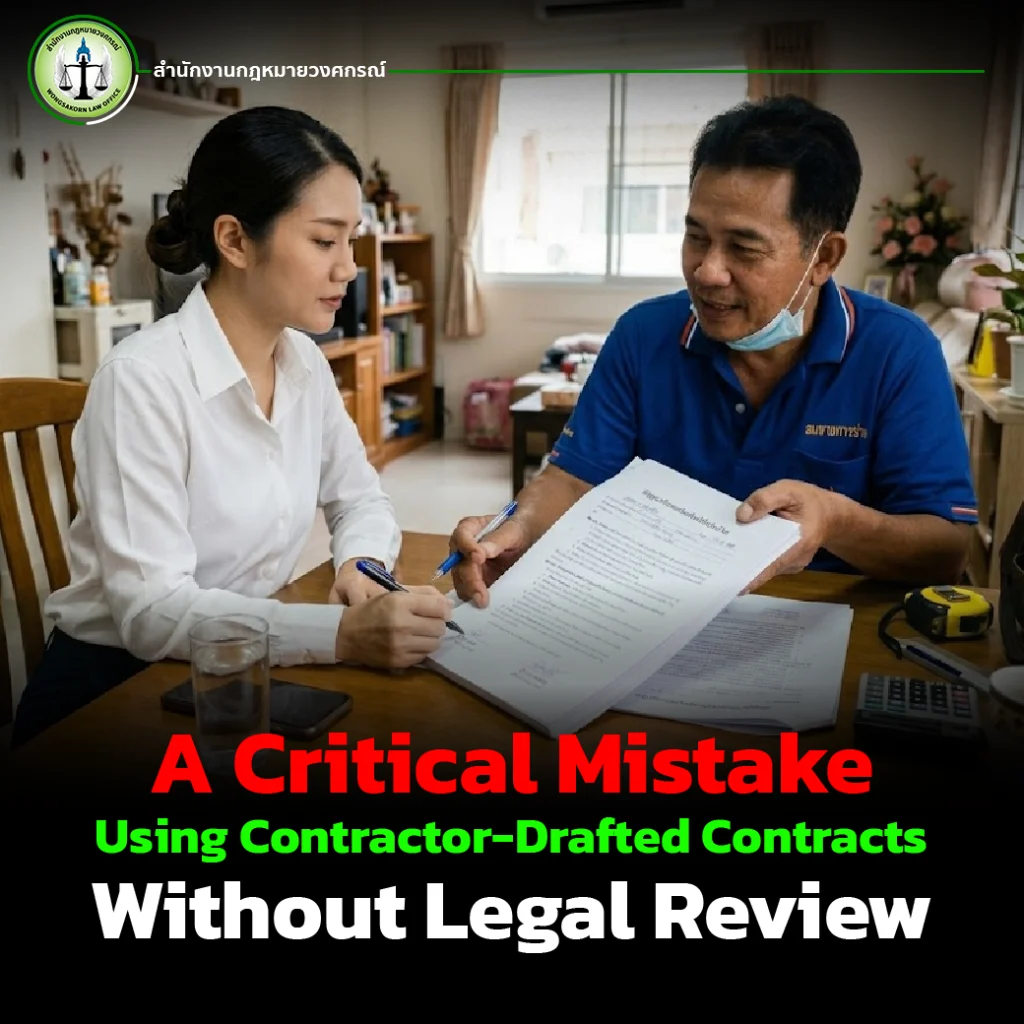
Many companies prioritize “closing the deal” over carefully drafting the contract. As a result, they often rely on Templates downloaded from the internet, Standard form contracts, AI-generated contracts, Internally drafted agreements without legal review.

While these methods may save time and costs in the short term, they can lead to substantial losses in the long run especially when payment defaults or disputes arise.

Common issues found in weak contracts include

  • No clear payment terms
  • No penalties or interest for late payment
  • No dispute resolution clauses
  • Lack of clear delivery terms

When a dispute occurs, creditors often find themselves unable to fully enforce their rights because the contract failed to address these issues from the beginning.

Even If the Partner Breaches the Contract, Your Contract Must Still Protect You

It is undeniable that failing to make payment as agreed constitutes a breach of contract. However, from a legal perspective, it is equally important that the sales contract is designed to prevent and manage such risks.

If the contract is not sufficiently robust, even when the other party is clearly at fault, you may face challenges such as

-Inability to claim full damages

-Lengthy legal proceedings

-Weaker negotiating power

-Damage to business relationships

A good contract is not just a formality it is a powerful tool that must effectively protect your company’s interests.

Drafting Contracts Internally vs Using a Legal Advisor A Critical Difference

One of the main causes of contractual problems is drafting agreements without professional legal oversight.

Drafting contracts internally

  • Pros: Cost-saving, quick turnaround
  • Cons: Lack of legal precision, incomplete risk coverage, ambiguous language

Using a legal advisor

  • Clear and legally sound contract structure
  • Comprehensive coverage of key legal issues
  • Reduced risk of disputes
  • Stronger negotiating position

This difference may not be obvious at the time of signing but it becomes critically clear when problems arise.


Legal Advisor: A Smarter Investment Than Fixing Problems Later

Many businesses believe they do not need a legal advisor until a problem occurs. Reasons often include cost concerns, overconfidence in internal handling, or underestimating legal risks.

In reality, not having a legal advisor can expose your company to hidden risks such as:

  • Contracts with legal loopholes
  • Unfair terms that disadvantage your business
  • Loss of important legal rights without realizing it

Once a problem arises, resolving it is often far more expensive than preventing it from the start.

The Risk of Hiring Lawyers Case by Case

Another common approach is hiring lawyers only when issues arise.

While this may seem flexible, it can create long-term challenges

  • Lack of understanding of your overall business
  • Inconsistent legal strategies
  • Redundant work processes
  • Miscommunication risks

Different lawyers may have different approaches, which can lead to inconsistencies or even conflicts especially when handling multiple cases. This results in a lack of systematic legal risk management.

Why Is a Legal Advisor Essential for Your Business?

Having a legal advisor is not an expense, it is an investment in risk prevention.

A legal advisor can help your business by

  • Drafting and reviewing sales contracts to ensure legal strength
  • Analyzing risks before entering transactions
  • Providing ongoing legal guidance
  • Establishing long-term dispute prevention systems

Most importantly, a legal advisor understands your business as a whole, allowing them to provide advice that is both practical and highly relevant.


The Problem Is Not Just One Party It Is the System

When a partner fails to make payment, the issue is not solely one party’s fault. It stems from:

  • A partner failing to honor the agreement
  • A sales contract that is not strong enough to protect your rights

Therefore, the real solution is not just chasing payments, it is building a strong legal and contractual system from the beginning.


Consult a Legal Advisor to Solve the Problem at Its Core

If you are facing issues with a sales contract or looking for a reliable legal advisor to support your business long-term, Wongsakorn Law Office is ready to assist you.

Our services include:

  • Legal advisory services
  • Contract drafting and agreements
  • Contract review and analysis
  • Corporate regulations and compliance
  • Ongoing legal consultation

We work  closely with you to define a Scope of Work that aligns with your business needs because we believe:

Every business has problems but solving them requires the right approach, not temporary fixes.

👉 Contact us today to ensure your business is legally secure from the very beginning.

Drafting Solid Online Business Contracts to Prevent Payment Defaults – Legal Contract Drafting Services by Wongsakorn Law Office

In an era where online businesses are growing rapidly, many entrepreneurs are selling products and services through online platforms. These may include general product sales, installment payment sales, or transactions where customers place a deposit before receiving the product. However, one common problem that business owners frequently encounter is customers defaulting on installment payments, failing to pay on time, or refusing to take responsibility, which can cause significant financial losses to the business.

These issues often arise because entrepreneurs do not have a clear contract or rely on generic contract templates downloaded from the internet without legal review by a lawyer. As a result, when disputes arise, the contract being used may not be fully enforceable under the law.

Therefore, drafting a clear and legally sound contract from the beginning is extremely important, especially for online businesses that handle a large number of transactions with customers.

The Importance of Contract Drafting in Online Businesses

Contract drafting is an essential tool for defining the rights and obligations of both sellers and buyers. When terms and conditions are clearly specified, the risk of future disputes can be significantly reduced.

For online businesses, contracts often involve issues such as:

  • Product ordering conditions
  • Deposit or down payment requirements
  • Installment payment terms
  • Payment deadlines
  • Penalties for late payment or default
  • Contract cancellation conditions

When contracts are properly drafted, business owners can use them as strong legal evidence if payment defaults occur or if disputes arise with customers.

Common Problems When Businesses Do Not Have Clear Contracts

Many entrepreneurs start their businesses using only chat messages or verbal agreements with customers. This can lead to several problems, such as:

  • Customers stop paying after receiving products through installment plans
  • Customers deny agreeing to certain conditions
  • Disputes regarding product returns
  • Customers refusing to pay the remaining balance

Without a clear contract, business owners may face difficulties when attempting to enforce their legal rights or pursue legal action.

Risks of Using AI-Generated or Internet Contract Templates

Today, many people choose to use AI-generated contracts or online templates because they appear convenient and cost-saving. However, relying on ready-made contracts may carry several risks:

1. Content May Not Comply with Thai Law

Some contract templates are designed based on foreign legal systems. When used in Thailand, certain provisions may not comply with Thai law, making them difficult or impossible to enforce.

2. Contracts May Not Fit Your Business Model

Every business has different risks and transaction structures. Generic templates may not cover the specific needs or risks of your particular business.

3. Lack of Penalties for Payment Defaults

Some contract templates fail to specify penalties or procedures when a party fails to make payments, leaving business owners without adequate protection.

4. No Legal Advice from a Lawyer

Using AI-generated contracts or downloading templates without a lawyer’s review may cause entrepreneurs to overlook critical legal issues.

Online Business Contract Drafting Services by Wongsakorn Law Office

Wongsakorn Law Office provides professional online business contract drafting services for entrepreneurs seeking legal certainty. Our services include:

1. Customized Business Contracts

Our legal team drafts contracts tailored specifically to your business model, whether it is online product sales, installment-based sales, or service businesses.

2. Installment Payment Agreement Drafting

For businesses selling products through installment payments, we can draft contracts clearly defining:

  • Number of payment installments
  • Payment due dates
  • Penalties for payment default
  • Contract termination rights

3. Deposit or Down Payment Agreement Drafting

Clearly defined deposit or down payment terms can help prevent customers from canceling orders without valid reasons.

Our lawyers can draft contracts that specify these terms comprehensively.

4. Ongoing Legal Consultation

In addition to contract drafting services, entrepreneurs can consult our lawyers regarding legal issues related to online businesses at any time, including:

  • Customer payment defaults
  • Contract cancellations
  • Business disputes

How Strong Contracts Protect Your Business

A well-drafted contract allows entrepreneurs to:

  • Clearly define transaction conditions
  • Prevent installment payment defaults
  • Reduce the risk of disputes
  • Use contracts as legal evidence

Additionally, legally sound contracts enhance business credibility and increase customer confidence in conducting transactions.

Consult a Lawyer Before Drafting a Contract to Protect Your Business

Although many tools today can quickly generate contracts, a strong contract requires a deep understanding of legal principles and business structures.

Having a lawyer draft your contract from the beginning can reduce future risks and help entrepreneurs operate their businesses with confidence.

If you are an entrepreneur who needs to draft an online business contract, installment payment agreement, or a contract system to prevent payment defaults, you may consult the legal team at Wongsakorn Law Office for professional legal advice and tailored contract drafting services.

Having a properly drafted contract from the beginning is the best way to protect your business in the long term.

A Divorce Agreement Is Extremely Important!  How to Draft a Divorce Settlement That Is Legally Enforceable Without Going to Court

Divorce is a sensitive matter involving legal issues, personal relationships, and the property of both spouses. Many people believe that simply registering a divorce at the district office is enough to complete the process. In reality, however, if there is no clear divorce settlement agreement, disputes may arise later especially regarding property, debts, and child custody.

Therefore, preparing a divorce agreement is an essential step. This document outlines the details of the arrangements between spouses after the divorce. If it is properly drafted in accordance with the law, the agreement can be legally enforceable and significantly reduce the need to file a lawsuit in court in the future.

This article explains what a divorce agreement is, why it is important, and the techniques for drafting one so that it can be effectively enforced without the need for court proceedings.

What Is a Divorce Settlement Agreement?

A divorce settlement agreement is a document in which spouses mutually agree on various conditions following their divorce, such as


  • Division of marital property
  • Allocation of debts
  • Child custody arrangements
  • Child support payments
  • Visitation rights
  • Spousal support (if any)

This document serves as important evidence showing the mutual intention of both parties and how they agreed to handle matters after the divorce. If disputes arise in the future, the court may consider this agreement when making its decision.

However, if the agreement is drafted without careful consideration or contains unclear language, it may create difficulties in enforcement later. In some cases, the parties may need to bring the matter back to court so that a judge can formally determine the rights and obligations of each party.

Why Is a Divorce Agreement Important?

Many people assume that a mutual divorce only requires signing documents at the district office. In reality, registering a divorce alone does not specify the detailed rights and responsibilities of the parties after the divorce.

Without a clear divorce agreement, problems may arise, such as:

  • One party refusing to divide property as previously discussed
  • Failure to pay child support
  • Disputes over child custody
  • One party denying prior verbal agreements

When such issues occur, the parties may have to file a lawsuit in court, which can result in additional time, costs, and increased conflict.

Techniques for Drafting an Enforceable Divorce Agreement

If you want your divorce agreement to be legally enforceable and reduce the risk of future litigation, consider the following important techniques.

1. Clearly Specify All Details

The agreement should clearly describe details such as:

  • Which spouse owns each asset
  • How property will be divided
  • Who is responsible for which debts

For example, instead of writing “the property will be divided equally,” it is better to specify clearly who will receive the house, car, or bank accounts. This helps prevent different interpretations later.

2. Include Comprehensive Terms Regarding Children

If the couple has children, the agreement should clearly address:

  • Legal custody
  • Monthly child support
  • Educational expenses
  • Visitation rights

Clearly defining these conditions helps reduce future disputes and ensures that the child’s welfare is properly maintained.

3. Specify Payment Methods Clearly

If the agreement includes child support or spousal support, it should specify:

  • The exact amount
  • The payment due date
  • The payment method

For example, payments may be transferred to the receiving party’s bank account on a specified date each month. This allows payments to be verified later if necessary.

4. Both Parties Must Sign the Agreement

The agreement carries stronger legal weight when it includes the signatures of both spouses. It is also advisable to have witnesses sign the document to confirm that both parties entered into the agreement voluntarily.

5. Attach the Agreement to the Divorce Registration

An important technique that many people are unaware of is attaching the divorce settlement agreement to the divorce registration at the district office.

When the agreement is recorded as part of the divorce registration, it provides greater clarity and can serve as official evidence if disputes arise in the future.

Common Mistakes in Divorce Agreements

Many post-divorce disputes occur because of mistakes such as

  • Vague or unclear wording
  • No details about property division
  • No agreement on child support
  • No specified payment method
  • No witnesses signing the document

These mistakes may weaken the enforceability of the agreement and could result in the need to take the matter to court for a judicial decision.

Consult a Lawyer Before Drafting a Divorce Agreement to Protect Your Rights

Preparing a legally sound divorce settlement agreement is not simply about writing down general terms. It requires careful consideration of legal provisions, property details, and the rights of each party.

Consulting a lawyer before drafting the agreement can help ensure that it complies with the law, covers all key issues, and minimizes the risk of future disputes. A properly prepared agreement can often be enforced without the need to bring the case to court.

If you are planning a divorce or preparing a divorce settlement agreement, consulting a lawyer who specializes in family law can help make the process smoother and ensure that your rights are properly protected.

Consult a lawyer – Click here >> Contact Us <<

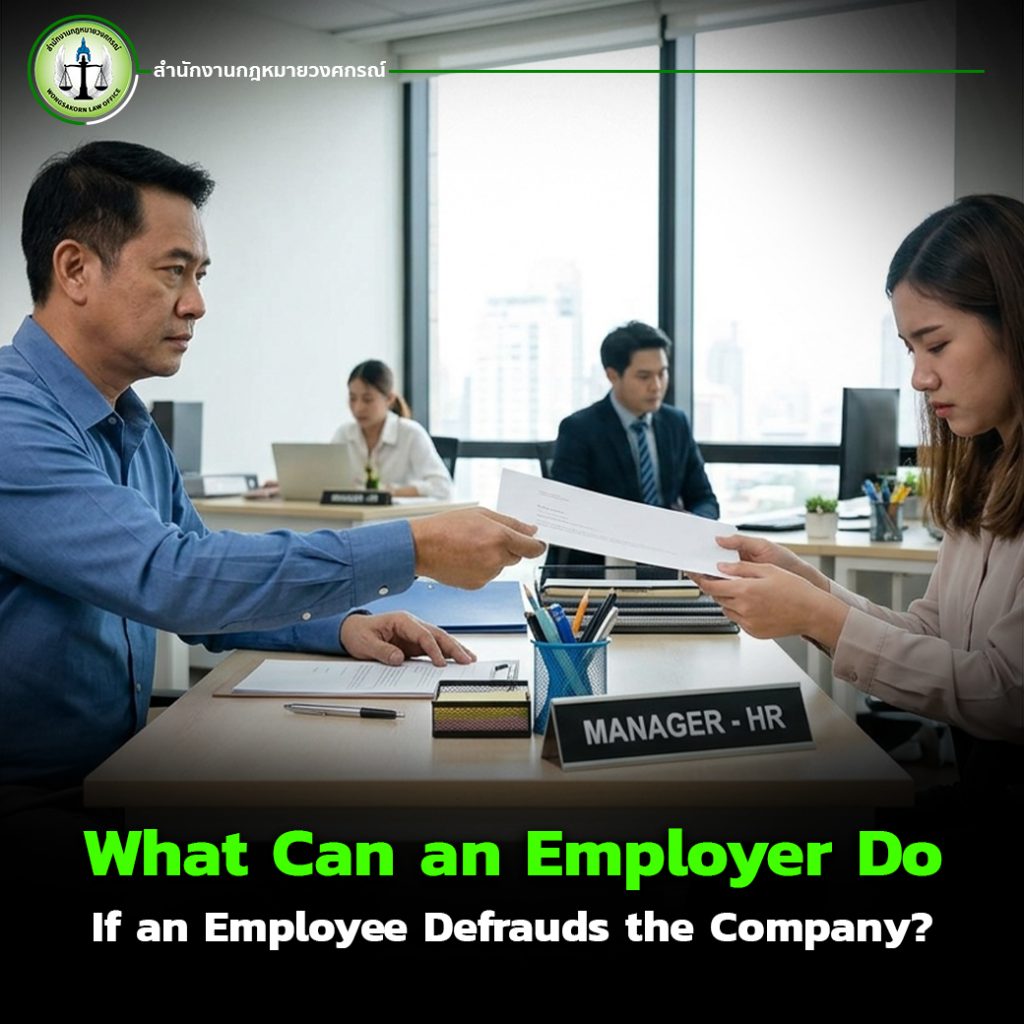
A Major Headache for Companies: When an Employee Commits Fraud Against the Company but Says “No Money, Won’t Pay” What Can an Employer Do Under the Law?

In the business world, one of the situations that entrepreneurs and organizations fear the most is internal fraud committed by employees. The damage caused is not limited to financial loss; it can also affect the company’s credibility, operational systems, and the overall workplace environment. In many cases, when a company discovers that an employee has committed misconduct such as embezzling company funds, using company assets for personal purposes, or conducting unauthorized financial transactions the employee may simply respond with the phrase: “No money, won’t pay.” This leaves many organizations wondering what legal actions an employer can take.

This article by Wongsakorn Law Office explains the legal options available to employers when they discover that an employee has committed fraud or misconduct against the company.

Employee Fraud Within an Organization

Employee fraud is an issue that can occur in organizations of all sizes, whether small, medium, or large enterprises. Common examples of fraudulent behavior include

  • Employees embezzling company funds
  • Employees falsifying accounting documents
  • Employees selling or using company property for personal benefit
  • Employees using company information for personal gain
  • Employees colluding with external parties to defraud the company

When a company discovers such actions, one of the most challenging issues is recovering the damages, especially when the employee refuses to take responsibility and claims “no money, won’t pay.”

What Can an Employer Do If an Employee Defrauds the Company?

When a company finds that an employee has committed fraud, the employer has several legal options, including the following:

1. Disciplinary Action and Termination

Under labor law, if an employee commits serious misconduct, such as fraud or dishonesty in the course of their duties, the employer has the right to terminate the employee without paying severance compensation.

Fraud is considered a serious breach of trust between the employer and employee. Therefore, the company may immediately terminate the employment. However, it is essential to have clear and sufficient evidence to prevent potential counterclaims from the employee later.

2. Criminal Proceedings

If the employee’s actions constitute a criminal offense, such as Embezzlement, Fraud, Forgery of documents the employer may file a criminal complaint against the employee. If found guilty, the employee may face legal penalties such as imprisonment, fines, or both.

Criminal proceedings can also create pressure on the offender to take responsibility for the damages caused.

3. Civil Lawsuit to Claim Damages

Even if the employee claims “no money, won’t pay,” the employer can still file a civil lawsuit to claim compensation for damages.

If the court rules that the employee must compensate the company, the employer may enforce the judgment through legal procedures such as Seizure of assets, Freezing bank accounts, Legal enforcement of the court judgment

Therefore, saying “I won’t pay” does not mean the employee can escape legal responsibility.

4. Collecting Evidence Before Taking Legal Action

Before initiating legal action against an employee, the most important step is to gather sufficient evidence, such as Accounting records, Proof of financial transfers, Emails or messages, CCTV footage, Witness testimony

These pieces of evidence are crucial for proving that the employee actually committed the misconduct.

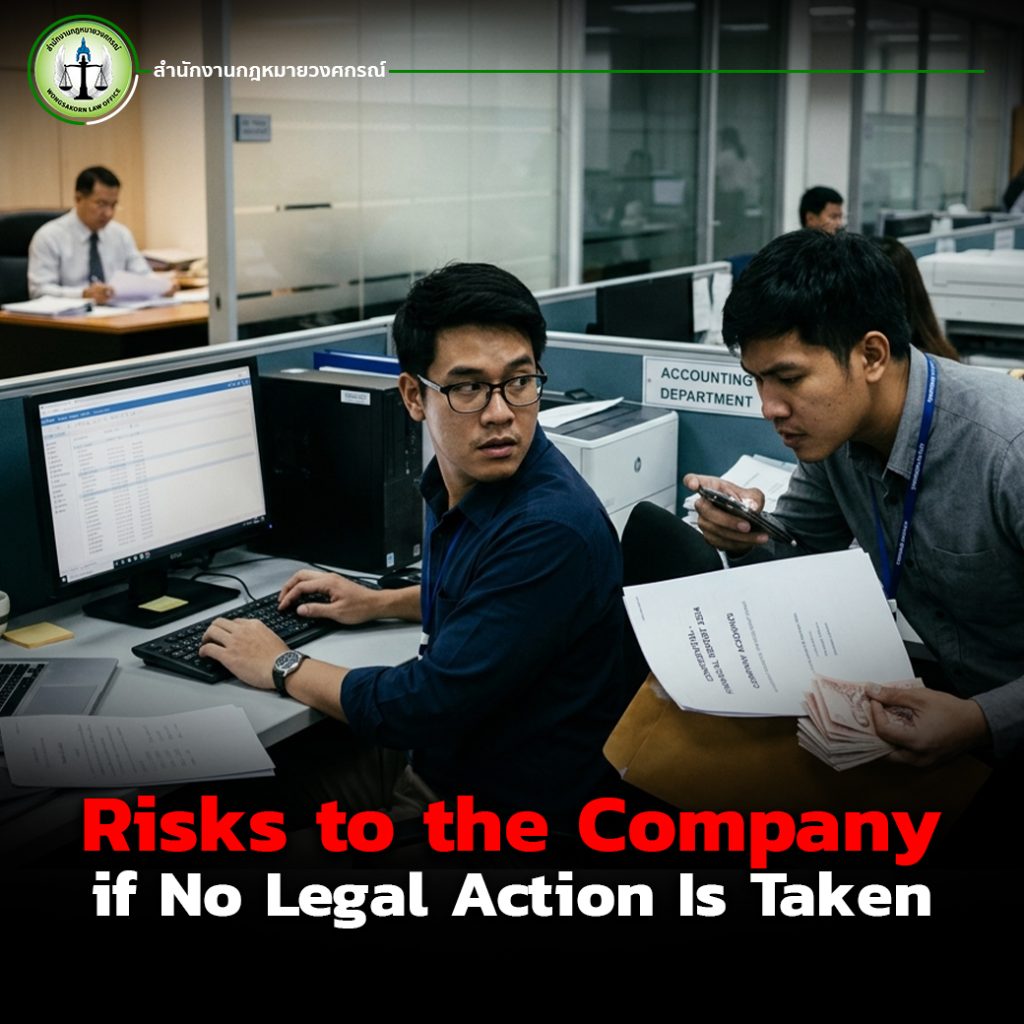
Risks to the Company if No Legal Action Is Taken

Some organizations choose to overlook the issue to avoid the time and effort involved in legal proceedings. However, failing to take action can lead to several negative consequences, such as

1. Other employees may imitate the misconduct

2. The company may suffer further financial or asset losses

3. The organization’s credibility may decline

4. Internal control systems may become weak

Therefore, when employee fraud is discovered, the company should take the matter seriously and respond appropriately.

How to Prevent Employee Fraud in a Company

In addition to resolving existing issues, organizations should implement preventive measures, such as

  • Establishing internal audit systems
  • Separating financial duties among different employees
  • Implementing multi-step approval processes
  • Regularly reviewing financial transactions

These measures can significantly reduce the risk of employee fraud within the organization.

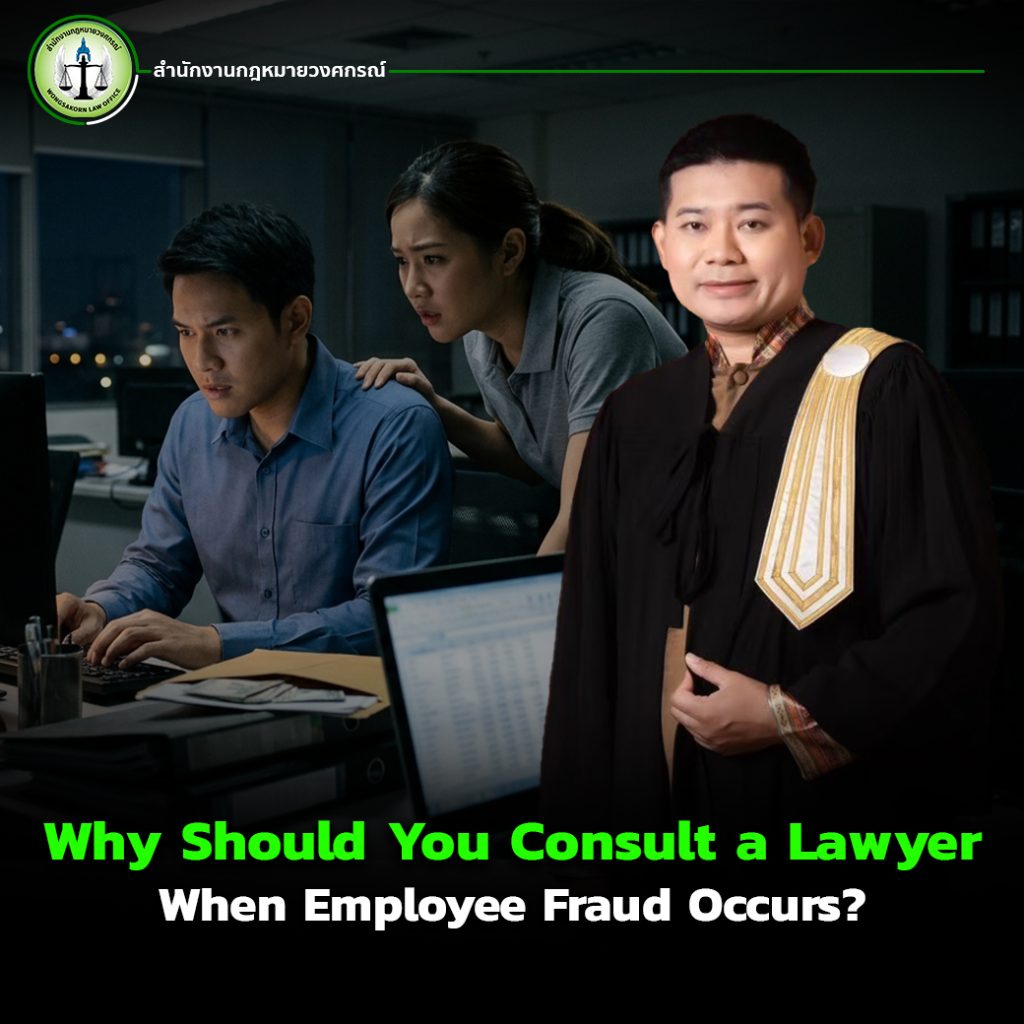
Why Should You Consult a Lawyer When Employee Fraud Occurs?

Taking legal action against a fraudulent employee is not always straightforward because it may involve labor law, criminal law, and civil law simultaneously.

A lawyer can assist in several ways, including

  • Analyzing the legal aspects of the case
  • Reviewing and organizing evidence
  • Developing legal strategies
  • Filing criminal complaints
  • Initiating civil lawsuits for compensation

Having legal professionals involved from the beginning helps ensure that the company proceeds correctly under the law and reduces the risk of counterclaims.

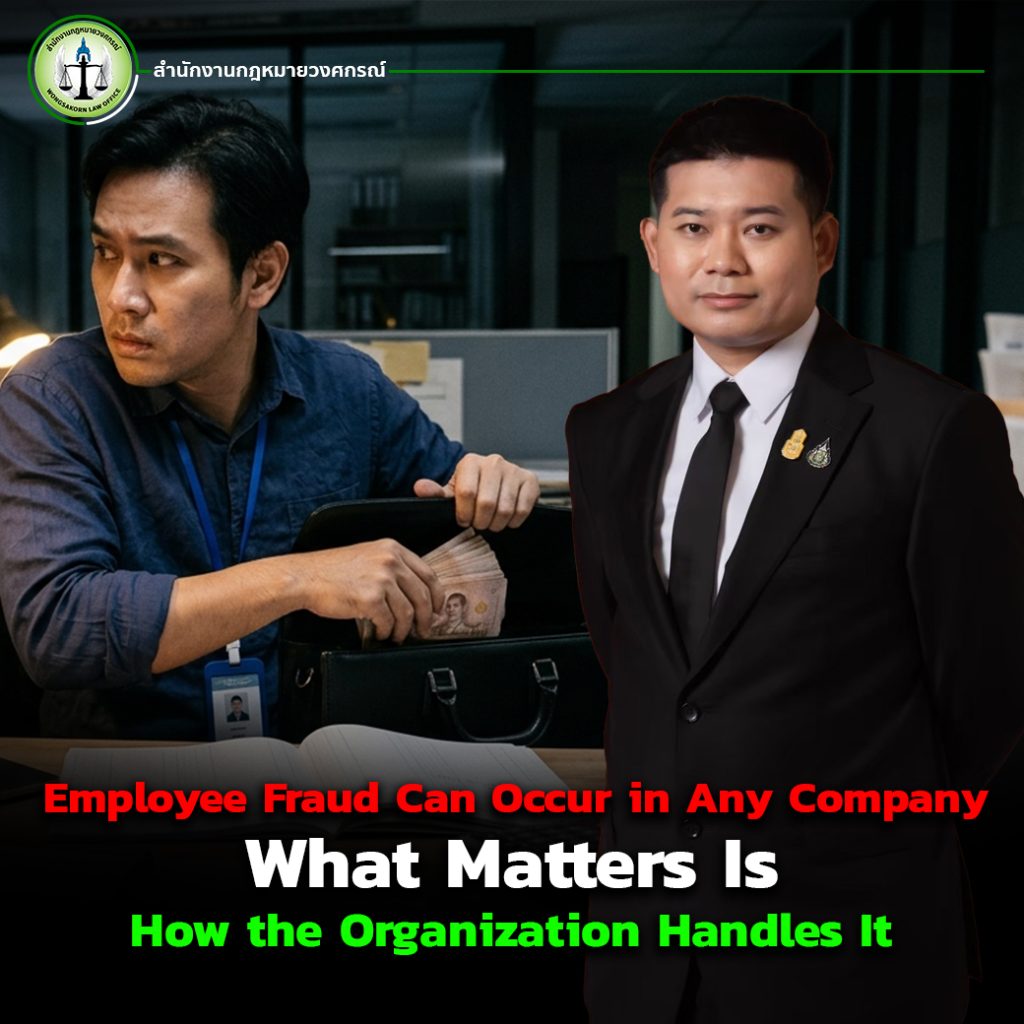
Employee Fraud Can Occur in Any Company What Matters Is How the Organization Handles It

Employee fraud can happen in almost any organization, regardless of whether it is a small, medium, or large business. However, the key issue is not whether the problem occurs, but how the organization manages and addresses it legally.

If a company has effective internal control systems, carefully gathers evidence, and follows the proper legal procedures, it can protect its interests and minimize potential damage.

For companies or organizations facing problems involving employee fraud or embezzlement, you can consult Wongsakorn Law Office for professional legal advice. Our team can help analyze the situation, develop solutions, and take appropriate legal action efficiently.

If you are experiencing issues with employee fraud, click “Contact Us” to consult with our legal team.

Checking the Legal Status of Foreign Nationals Before Entering Thailand: An Important Matter That Should Not Be Overlooked

In today’s globalized world, international travel has become faster and more convenient than ever before. Thailand has become a major destination for foreigners for various purposes, including tourism, investment, business operations, and employment within organizations across the country. However, one important issue that is often overlooked is checking the legal status of foreign nationals before entering Thailand.

Verifying legal status through government authorities, particularly the Immigration Bureau, is an essential process that can help prevent legal complications in the future. This applies not only to the foreign individual but also to organizations, companies, and individuals in Thailand who work with or have business relationships with foreign nationals.

This article from Wongsakorn Law Office explains why checking legal status is important, the benefits of conducting such verification, and why foreign nationals should ensure their legal status is clear before entering Thailand.

What Does Checking the Legal Status of Foreign Nationals Mean?

Checking legal status refers to verifying whether a person has any criminal record, ongoing criminal case, or arrest warrant in Thailand. Such information may be verified through relevant government authorities, including the Immigration Bureau and other agencies involved in the Thai justice system.

This type of verification is commonly used in situations such as:

  • Foreign nationals who wish to reside in Thailand for an extended period
  • Foreign investors planning to conduct business in Thailand
  • Individuals preparing to work for companies or organizations in Thailand
  • Persons involved in property ownership or financial investments in Thailand
  • Individuals who wish to confirm whether they have any legal issues in Thailand

Therefore, checking legal status is an important step in ensuring both legal certainty and personal security.

Why Should Foreign Nationals Check Their Legal Status Before Entering Thailand?

In some cases, foreign nationals may not even realize that they are connected to a legal case or arrest warrant in Thailand. This may occur due to prior business disputes, civil cases that later lead to legal action, or criminal cases that are still under investigation.

If an individual travels to Thailand without checking their legal status beforehand, several situations may arise:

1. Immediate Detention at the Airport

If authorities discover an arrest warrant or legal case associated with the individual, they may be detained immediately by immigration officers upon arrival.

2. Denial of Entry into Thailand

In certain circumstances, immigration authorities may refuse entry into the country.

3. Damage to Business or Investment Plans

Foreign investors facing legal issues may be unable to proceed with their planned business activities in Thailand.

4. Reputation and Credibility Risks

Legal complications may negatively affect the individual’s or organization’s reputation and credibility.

For these reasons, checking legal status in advance can significantly reduce these risks.

Benefits of Checking Legal Status Before Traveling to Thailand

Conducting legal verification before entering Thailand offers several important advantages:

1. Reducing Legal Risks

Knowing one’s legal status in advance allows individuals to resolve legal issues or prepare appropriate legal action before traveling.

2. Confidence When Traveling

Foreign nationals can travel with peace of mind if they know they have no legal complications in Thailand.

3. Supporting Organizational Screening Processes

Companies and organizations that work with foreign nationals can use legal status verification as part of their due diligence and screening process.

4. Preventing Long-Term Damage

Advance verification helps avoid potential future problems such as arrest, legal proceedings, or financial losses.

Who Should Especially Consider Checking Their Legal Status?

Legal status verification is particularly important for the following groups:

  • Foreign investors who intend to conduct business in Thailand
  • Individuals planning to purchase or hold real estate in Thailand
  • Foreign nationals married to Thai citizens
  • Foreign employees planning to work in Thailand
  • Individuals who previously had disputes or legal cases in Thailand

By checking legal information before entering the country, these individuals can plan their travel, business activities, and residence in Thailand more safely and effectively.

The Importance of Legal Status Verification for Businesses in Thailand

Not only foreign nationals should be concerned about legal verification. Thai companies and organizations that work with foreigners should also consider checking legal status as part of their risk management process.

Examples include:

  • Companies hiring foreign executives
  • Businesses with foreign partners or shareholders
  • Companies conducting financial transactions with foreign individuals
  • Organizations involved in joint investments with international investors

Conducting legal status verification can reduce the risk of becoming associated with individuals who may have legal complications.

Consulting a Lawyer Before Conducting Legal Status Checks

Although legal status verification can be conducted through government authorities, consulting a lawyer beforehand can be extremely beneficial.

A lawyer can:

  • Analyze the legal situation
  • Review case-related information
  • Provide guidance on legal procedures
  • Contact relevant government authorities
  • Develop legal strategies if any legal issues are discovered

Having legal professionals involved from the beginning helps reduce the risk of procedural mistakes and ensures the process is handled correctly.

Legal Status Verification: The Best Prevention Against Legal Problems

In a world where international travel and cross-border business occur rapidly, legal issues can also arise unexpectedly. Checking legal status is therefore an important tool for preventing risks for both individuals and organizations.

For foreign nationals planning to enter Thailand, verifying legal status beforehand ensures that their entry into the country will proceed smoothly, safely, and without legal obstacles.

At the same time, businesses and organizations that work with foreign nationals should also give importance to such verification to prevent potential damage in the future.

Preparing in advance and verifying legal information is always better than having to resolve legal problems after they occur.

Consult a Lawyer >> Contact Us << Wongsakorn Law Office

Defamation through Google Reviews and Social Media: What Can Victims Do?

In the digital age, where anyone can easily post, comment, or leave reviews online, online defamation has become one of the most common legal issues. Whether it is posting harsh reviews on Google, public shaming on Facebook, attacking someone on TikTok, or spreading damaging information in messaging groups, all of these actions may constitute defamation under the law.

Many people mistakenly believe that “it’s just a review” or “just expressing feelings” is not illegal. In reality, if a statement causes damage to another person’s reputation, subjects them to contempt, or leads to public hatred, it may immediately fall under defamation.
This article explains what online defamation is, what victims can do, whether reviews can be removed, and why consulting a lawyer is an important solution.

What Is Online Defamation?

Online defamation is the act of making false statements or publishing messages, images, videos, or other content through online platforms in a way that damages another person’s reputation, exposes them to contempt, or causes them to be hated by society. This applies to individuals, business owners, companies, shops, and organizations alike.

Common examples include:

  • Writing Google reviews using harsh language such as “fraud,” “scam,” or “this shop is evil” without evidence
  • Posting someone’s name, photo, and personal information together with accusations
  • Publicly attacking or encouraging mass harassment on social media
  • Sharing false or distorted information that harms another person’s image

Even if the poster claims it is “personal opinion,” if the message harms another person’s reputation, it can still be considered defamation.

When Does a Google Review Become Defamation?

Posting a business review is not illegal if it is an honest opinion based on real experience, such as slow service, poor food quality, or dissatisfaction with service. However, it becomes defamation when:

  • Harsh or insulting language is used without evidence
  • False or misleading information is provided
  • There is intent to damage reputation or harass
  • Others are encouraged to attack the business or individual

The line between “honest review” and “defamation” depends mainly on the intent and the content of the statement.

What Should You Do If You Are Defamed Online?

If you become a victim of online defamation, it is important not to react emotionally but to proceed systematically:

1. Collect Evidence Immediately

Such as:

  • Screenshots of the messages
  • URLs or links to the posts
  • Date, time, and account name of the poster
  • Profile photos or related information

This evidence is crucial for legal proceedings.

2. Consult a Lawyer

A lawyer can help determine:

  • Whether the content constitutes defamation
  • Whether to pursue a civil or criminal case
  • Whether to start with negotiation or file a police report

Having legal guidance from the beginning reduces procedural mistakes and risks.

3. Request Removal of the Post or Review

In many cases, it is possible to:

  • Report the content to platforms such as Google or Facebook
  • Send a legal notice or warning letter
  • Ask the poster to delete or correct the statement

Some disputes can be resolved without going to court.

Can the Offender Be Identified?

Many people believe that using fake accounts or aliases makes them untraceable. In reality, if the case involves defamation, legal procedures can be used to:

  • Request IP address information
  • Obtain user data from online platforms
  • Use investigators and legal authorities to identify the offender

Posting defamatory content online does not exempt anyone from legal responsibility.

Damage Caused by Online Defamation

The impact is not limited to emotions but includes:

  • Loss of reputation and credibility
  • Decrease in income or business revenue
  • Misunderstanding by society
  • Stress and psychological harm
  • Escalation of conflicts

In some cases, victims may file civil lawsuits demanding significant compensation.

Why Should You Consult a Lawyer When Defamed?

Consulting a lawyer provides many advantages:

  • Legal evaluation of the strength of the case
  • Guidance on lawful content removal
  • Drafting legal warning letters
  • Representing victims in legal proceedings
  • Systematic protection of rights and reputation

Lawyers do not only file lawsuits; they can also seek the most appropriate solution, such as negotiation, mediation, or legal action when necessary.

Defamation Is Not a Minor Issue in the Online Era

In the past, defamation occurred within limited circles. Today, a single post can reach thousands or even tens of thousands of people within minutes. The damage is therefore far more severe.

Both posters and victims should realize that:

  • Opinions must be expressed honestly and responsibly
  • Harsh language carries legal risks
  • Reputation is an asset that must be protected

Online Defamation Has Legal Solutions When the Law Is Used Properly

Whether you are defamed through Google reviews or attacked on social media, you do not have to endure the damage alone. The law provides options to:

  • Remove unlawful content
  • Identify the offender
  • Take legal action to seek justice

Consulting a lawyer from the beginning is the safest and most effective approach.

If you are facing online defamation, do not let a small issue become a major problem. Protecting your reputation means protecting your future in the digital world.

Why Must Foreigners “Check for Arrest Warrants” Before Entering Thailand? Pros, Cons, and an Importance That Should Not Be Overlooked

In an era when international travel has become easy, many foreigners travel to Thailand for tourism, work, investment, or long-term residence. However, one important issue that is often overlooked is the checking of arrest warrants before entering Thailand. In reality, this simple step can help prevent serious legal problems from the very beginning.

There have been many real cases in which foreigners traveled to Thailand without knowing that they had an arrest warrant or an old pending case either in Thailand or in their home country. When they passed through immigration control, they were immediately detained. This caused them to lose time, money, and important opportunities for business or daily life in Thailand. This article explains why checking for arrest warrants before entering Thailand is essential, while also highlighting both the advantages and disadvantages of conducting such a check in advance.

What Does Checking for an Arrest Warrant Mean?

Checking for an arrest warrant means verifying whether a person has any arrest warrants or pending cases recorded in government systems, such as:

  • Arrest warrants in Thailand
  • International arrest warrants
  • Ongoing criminal cases
  • Cases that may affect immigration or residency status in Thailand

This check does not necessarily mean that the person has committed a crime. In some cases, it may involve an old case that the individual was never aware of, or an administrative or legal matter that has not yet been formally closed.

Reasons Why Foreigners Should Check for Arrest Warrants Before Entering Thailand

Entering Thailand without knowing one’s legal status is highly risky. If a problem arises at the immigration checkpoint, the consequences can be immediate, such as:

  • Being detained
  • Being denied entry into the country
  • Facing criminal proceedings
  • Being deported back to the home country
  • Being placed on a watchlist

Conducting a preliminary check is like preparing before a journey. It helps determine:

  • Whether one can legally enter Thailand
  • What legal issues must be resolved in advance
  • What potential risks exist

Advantages of Checking for Arrest Warrants Before Entering Thailand

1. Prevents Immediate Arrest at the Airport

The most important advantage of checking in advance is avoiding a worst-case scenario, such as being arrested in front of many people at the airport or being detained unexpectedly.

2. Allows Advance Planning to Resolve Legal Issues

If an arrest warrant or pending case is found, foreigners can:

  • Contact a lawyer
  • Plan the correct legal process
  • Prepare documents or arrange for bail

instead of facing the problem without any options.

3. Reduces Business and Investment Risks

For investors or foreign employees, being arrested or denied entry can affect:

  • Business projects
  • Credibility and reputation
  • Business partners

Checking in advance ensures that travel is legally safe.

4. Increases Confidence in Traveling

After completing the check, foreigners can travel with peace of mind, without worrying about unexpected problems at immigration.

5. Prevents Impact on Visa and Residency Status

Cases or arrest warrants can affect visa renewal, work permits, or long-term residency. Early checking helps prevent future complications.

Disadvantages or Limitations of Checking for Arrest Warrants

Although checking has many advantages, there are some limitations that should be understood.

1. Requires Legal Expertise

Checking for arrest warrants is not something that ordinary individuals can do correctly on their own. It requires legal knowledge and an understanding of official procedures. If done incorrectly, the information obtained may be incomplete or inaccurate.

2. May Reveal Unexpected Problems

Some people may discover old cases they never knew about, which can cause anxiety or stress. However, knowing in advance is still far better than facing the problem at the airport.

3. Involves Costs

Using professional services or law firms to conduct the check may involve fees. Compared with the risk of arrest or deportation, these costs are relatively small.

4. Takes Time

In some cases, checking requires time to gather information from multiple systems. Therefore, it should be planned well in advance and not done too close to the travel date.

What Happens If You Do Not Check Before Entering Thailand?

If foreigners do not conduct a prior check, they may face:

  • Immediate detention
  • Damage to their reputation
  • High legal expenses
  • Being blacklisted from entering Thailand in the future
  • Negative impacts on family and business

These problems often occur suddenly and are difficult to resolve afterward.

Checking for Arrest Warrants Is Prevention, Not an Admission of Guilt

Many people misunderstand that checking for arrest warrants is like admitting guilt. In reality, checking is a way to:

  • Prevent risks
  • Prepare in advance
  • Protect one’s rights
  • Plan legally and carefully

It is similar to having a medical checkup before a long journey. The earlier you check, the lower the chance of facing serious problems.

Check First, Solve Later – Enter Thailand Safely

Checking arrest warrants for foreigners before entering Thailand is highly recommended in today’s world, where laws and immigration systems have become stricter. Knowing your legal status in advance is the best form of protection.

The advantages of checking include preventing problems, allowing advance planning, and increasing confidence in travel. The disadvantages are mainly related to time and minor costs, which are insignificant compared to the risks of arrest or denial of entry.

Check for Arrest Warrants Before Traveling to Thailand

If you or someone close to you is a foreigner planning to enter Thailand whether for tourism, work, or long-term residence, checking your legal status in advance is something that should not be overlooked.

Wongsakorn Law Office is ready to provide consultation and assist with arrest warrant checks in accordance with the law, so that you can enter Thailand with confidence, safety, and without unexpected legal problems.

Because checking today
means preventing major problems tomorrow,
and it is the key to living safely and legally in Thailand.

Foreigners and Land Purchases in Thailand: Why Consulting a Lawyer Before Investing in Real Estate Is Essential

In recent years, Thailand has become one of the most popular destinations for foreign retirees who wish to reside long-term. This is due to its favorable climate, reasonable cost of living, and overall quality of life. Many foreigners therefore decide to invest their life savings in purchasing a house or land to serve as their residence in later years.

However, a major issue that many foreigners do not fully understand is that Thai law does not permit foreigners to directly own land or houses. Purchasing real estate without consulting a lawyer thus poses significant legal and financial risks. This article explains the commonly used arrangements, their advantages and disadvantages, and why consulting a lawyer before purchasing land or holding real estate in Thailand is critically important.

Why Foreigners Cannot Own Land in Thailand?

Under Thai law, foreigners are not permitted to hold ownership of land or houses directly, except in very limited and special circumstances, such as large-scale investments approved by the government, which are rare in practice.

Due to these restrictions, foreigners who wish to own a home in Thailand often use indirect methods, such as:

  • Having a Thai spouse or partner hold legal ownership of the land
  • Investing their own money to purchase or build a house, while the title deed is registered in the Thai spouse’s name

At first glance, this approach may seem simple and safe. However, from a legal perspective, it carries significant risks if there is no proper legal structure in place.

Usufruct as a Common Legal Solution for Foreigners

To protect their rights, many foreigners choose to register a lifetime usufruct (right of use) on the land title deed at the Land Department on the same day the ownership is registered.

A usufruct means that:

  • The foreigner has the right to live in, use, and benefit from the house and land for the rest of their life
  • Even though the land is legally owned by the Thai spouse, the foreigner cannot be evicted from the property
  • If the land is to be sold, consent from the usufruct holder is required first

As a result:

  • The Thai spouse obtains ownership of the land
  • The foreigner obtains the right to live on and use the property for life
  • The investment is not given away without legal protection

From one perspective, this method provides security for foreigners. However, it also creates legal and commercial consequences that must be carefully considered.

Disadvantages and Problems Arising from Registering a Usufruct

Although a usufruct protects the foreigner’s rights, it often creates practical problems, especially when family relationships change.

Common issues include:

  • If disputes or separation occur, the land becomes burdened with legal encumbrances
  • When the Thai spouse wishes to sell the land, prospective buyers will inspect the title deed and find a “lifetime usufruct” registered on it
  • Most buyers will be reluctant to purchase because they cannot immediately use or possess the property
  • The selling price may drop significantly, or the land may not be sellable at all

This is one of the key reasons why many foreigners choose to buy condominiums instead of houses or land. Thai law allows foreigners to directly own condominium units, subject to the legal quota specified by law.

Risks of Buying Land Without Consulting a Lawyer

Many foreigners decide to purchase a house or land based on trust in their spouse or close acquaintances, without seeking advice from legal professionals. The consequences may include:

  • A large financial investment without proper legal protection
  • Disputes arising when personal relationships change
  • Inability to sell or transfer the property
  • Risk of being considered as indirectly or unlawfully owning land through a nominee arrangement
  • Exposure to both civil and criminal legal liability

Real estate is a high-value asset. Even a small legal mistake can result in the loss of a lifetime’s savings.

Why You Should Consult a Lawyer Before Buying Land or Real Estate?

Consulting a lawyer before investing in land or a house can provide the following benefits:

  • Analysis of ownership structures to ensure compliance with Thai law
  • Drafting legal agreements that protect the foreigner’s rights
  • Due diligence on title deeds and existing encumbrances
  • Prevention of future disputes in case of separation or sale
  • Advice on suitable alternatives, such as purchasing a condominium instead of land

A lawyer is not only someone who resolves problems after disputes arise, but also a professional who helps prevent risks from the very beginning.

Land Is Not Just Property, but Stability for Retired Foreigners

For retired foreigners, a house or land represents their final place of security and comfort in life. A single wrong decision can result in the loss of money, peace of mind, and long-term stability.

Understanding the law and planning correctly from the start is the key to ensuring that life in Thailand remains safe, secure, and sustainable.

Consult a Lawyer Before Buying Land in Thailand

If you or someone close to you is a foreigner planning to purchase a house or land in Thailand, do not make decisions based solely on trust or informal advice from others.

Wongsakorn Law Office is ready to provide legal consultation on real estate ownership for foreigners, including structuring legal rights, reviewing documents, and carefully preventing future legal problems in full compliance with Thai law.

Because buying land is not a small matter.
It is an investment in your entire life.

Let a lawyer take care of the process from the beginning,
so you can enjoy long-term security and peace of mind.

What Is Bail? Understanding Bail in Criminal Cases and Why a Lawyer Should Handle the Bail Process

The term bail is commonly heard when a criminal case occurs, whether it involves assault, traffic accidents, fraud, or other serious offenses. However, many people still do not fully understand what “bail” truly means, how the process works, and why some cases are granted bail while others are denied.

This article provides a clear and systematic explanation of bail in criminal cases, including its meaning, the types of assets used for bail, court conditions, and the consequences of not being granted bail.

What Is Bail in a Criminal Case?

Bail in a criminal case refers to a request for temporary release while the case is still under investigation or court consideration. The purpose is to allow the suspect or defendant to remain free and able to prepare and fight the case without being detained during the judicial process.

There are two main stages at which bail can be requested:

1.     At the investigation or prosecutor stage

2.     At the court stage (when detention has been ordered or the case has already been filed with the court)

What Assets Can Be Used as Bail?

Bail requires assets to guarantee that the suspect or defendant will not flee and will appear in court as required. Acceptable forms of bail include:

1.     Cash

2.     Land title deeds

3.     Government or official positions (in certain cases recognized by law)

4.     Other assets as deemed appropriate by the court

However, having a large amount of assets does not automatically guarantee that bail will be granted. The court considers several factors before making a decision.

Why Are Some Cases Granted Bail While Others Are Not?

The key reason is that bail depends on the discretion of the court, which evaluates multiple factors, such as:

1. Severity of the charge and possible punishment

If the offense carries a severe penalty, such as murder with a maximum sentence of death, the court will view the defendant as having a high risk of escape.
In contrast, less serious cases, such as negligent driving causing injury, may be more likely to receive bail.

2. Circumstances of the case

For example, fraud committed as part of an organized scheme or cases involving many victims may be considered high-risk for repeat offenses or escape.

3. Criminal record of the suspect

If the suspect has a prior criminal history, the court may deny bail due to concerns that the person will not appear in court or may flee.

4. Risk of interfering with witnesses or evidence

In cases such as murder, there may be concern that the defendant could threaten witnesses, destroy evidence, or cause further harm.


H2: What Conditions May the Court Impose When Granting Bail?

When bail is granted, the court sets a bail amount and may impose additional conditions, such as:

  • Determining the bail amount according to the seriousness of the offense
  • Prohibiting travel outside the country
  • Requiring the defendant to wear an electronic monitoring device (EM)
  • Requiring the defendant to appear in court on every scheduled date

These conditions are designed to prevent escape and interference with witnesses or evidence.


H2: What Happens If Bail Is Denied?

If bail is denied, the suspect or defendant will be detained during the trial process, which may last for several months or even years.

The consequences include:

  • Loss of personal freedom
  • Negative impact on family and employment
  • Damage to reputation
  • Living in detention despite not yet being found guilty by a final judgment

Even if the court later dismisses the case and compensation can be claimed for wrongful detention, the time and opportunities lost can never be recovered.

Does Having a Lot of Money Guarantee Bail?

Many people mistakenly believe that having a large amount of money automatically ensures bail approval. In reality, money alone is not the deciding factor.

The court considers:

  • Whether the offense carries a severe penalty
  • Whether there is a risk of flight
  • Whether the amount of bail offered appears unusually high

In some cases, offering an unusually large sum of money may cause the court to suspect an intention to flee, leading to a denial of bail.

Why Should a Lawyer Handle the Bail Process?

Requesting bail is not simply a matter of submitting money or property to the court. It requires:

  • Legal analysis of the charges
  • Proper preparation of bail petitions
  • Clear legal reasoning presented to the court
  • Proposing appropriate and reasonable conditions

An experienced lawyer can significantly increase the chances of bail approval and reduce the risk of rejection.


H2: Bail Is an Important Right That Should Not Be Overlooked

Bail is not a minor matter it is a fundamental right within the justice system that allows defendants to fight their case fairly and with dignity.

If you or someone close to you has questions about bail or needs legal assistance with the bail process, you should seek advice from a legal professional immediately.

Understanding bail from the beginning is the key to protecting your rights, freedom, and future.

If you would like a lawyer to assist or handle your bail application:
👉 Click Contact Us to receive legal consultation right away.

The Problem of “Overloaded Trucks” – A Serious Issue Businesses Should Not Overlook and Why You Should Consult Wongkorn Law Office

The problem of overloaded trucks is one of the major issues faced by transportation operators and logistics business owners, especially in an era when the government has become stricter about road safety regulations. Being arrested for operating an overloaded truck is not merely a matter of paying a fine; it can also affect business licenses, corporate reputation, and long-term legal risks.

This article explains what overloaded trucks are, what to do if you are caught, what risks are involved, and why consulting Wongkorn Law Office is essential.

What Is an Overloaded Truck and Why Is It a Legal Issue?

An overloaded truck refers to a truck whose total weight, including cargo, exceeds the legal limit prescribed by law. Each type of truck has different maximum weight restrictions. Violating these limits constitutes an offense under traffic laws and transportation control regulations.

This issue not only poses dangers to other road users but also accelerates the deterioration of infrastructure such as roads and bridges. Therefore, authorities continuously set up weight inspection checkpoints. As a result, many business operators face legal cases related to overloaded trucks.

What Should You Do If Your Truck Is Caught for Being Overloaded?

If your truck is arrested for carrying excess weight, you should take the following steps:

1. Review the Details of the Arrest
Check the location of the arrest, the weighing method, and the documents issued by officials to determine whether procedures were carried out legally and correctly.

2. Do Not Pay the Fine Without Legal Consideration
In many cases, operators rush to pay the fine without knowing that they may have the right to contest the case or request mitigation.

3. Gather Relevant Documents
Such as weight slips, cargo invoices, truck permits, and company documents.

4. Consult a Lawyer or Law Firm Immediately
To evaluate possible solutions, reduce penalties, and plan preventive measures to avoid future violations.

Risks of Overloaded Truck Problems That Business Owners Must Know

Overloaded truck issues involve more than just fines. There are several serious risks, including:

  • Legal Risks
    Repeated violations may lead to multiple prosecutions or increased scrutiny from authorities.
  • Business Risks
    Temporary suspension of vehicle use can delay deliveries, dissatisfy customers, and cause financial losses.
  • Accident Risks
    Overloaded trucks are more likely to experience brake failure, tire blowouts, or loss of control, which may result in civil and criminal liability.
  • Corporate Reputation Risks
    A history of repeated legal violations can reduce trust from business partners and damage corporate credibility.

Why Is Prevention More Important Than Solving Problems After They Occur?

Many companies believe in “fixing the problem after being caught.” In reality, having proper truck weight control systems from the beginning such as staff training, proper cargo loading management, and legal consultation can significantly reduce the risk of violations.

Prevention also lowers long-term costs, including fines, vehicle repair expenses, and lost business opportunities. It is far more cost-effective than dealing with problems after they arise.

Why Should You Consult the Wongkorn Law Office If You Are Caught for an Overloaded Truck?

When an overloaded truck issue occurs, having legal experts involved from the start can prevent the situation from escalating. Wongkorn Law Office can assist in many areas, such as:

  • Providing legal consultation on overloaded truck cases
  • Reviewing the legality and procedures of the arrest
  • Developing strategies to contest charges or request penalty reductions in accordance with the law
  • Helping companies establish internal systems to prevent repeat violations
  • Handling criminal, administrative, and potential civil cases arising from the incident

Having a professional legal team not only minimizes immediate damage but also helps create long-term risk prevention strategies.

Overloaded Trucks Are Not a Small Issue but a Major Business Risk

In an era of intense competition and stricter regulations, overloaded truck problems can quickly become a business vulnerability if not managed properly. Business operators should view this issue as a matter of safety + legal compliance + corporate image, not merely as a one-time fine.

Having legal advisors from the beginning allows businesses to operate steadily, reduce risks, and build long-term confidence among partners and customers.

Consult Wongkorn Law Office for Overloaded Truck Issues

If you or your company is facing problems with overloaded trucks whether being arrested, fined, or concerned about future legal risks do not let a small issue turn into a major crisis.

Wongkorn Law Office is ready to provide comprehensive legal consultation and case management for overloaded truck matters, from case evaluation and legal strategy to long-term prevention planning.

Because having legal experts by your side is the safest solution for your business.

Line @ คลิก! โทรหาเรา คลิก!